Flawless victory was never on the cards for eurojank, but I honestly can't tell if it won or lost
Overview & Key Takeaways
An ode to the wonky yet wonderful projects of yesteryear, and their modern successors.
When is an insult not an insult? When it’s affectionate.
‘Friendslop’ might sound dismissive, but speaks of a pervasive cultural fondness for approachable, affordable co-op games that know how to stay out of the way of a meandering voice chat. ‘Walking simulator’ may have once been used as a cudgel to attack minimalist and meditative experiments in narrative, but has since become a helpful label for both the people who crave that experience and the developers making them. I can type ‘walking sim’ into my Gmail search bar and find multiple press releases hoping to sell me on short, story-led mysteries of one kind or another.
In the same way, ‘eurojank’ is an insult well-meant. On the face of it the term appears to condemn a whole continent's games as laughably buggy and low-budget. But speaking as a proud European, who has had the privilege to spend their working life flying to Frankfurt and Ghent and Uppsala to meet studios punching above their weight, I can tell you that eurojank—a term thrown around often in PC gaming circles in the early 2010s—is a byword for ambition.
Article continues below
It implies not just wide worlds and sprawling webs of complex systems, but a willingness on the part of the audience to accept the costs of that ambition in good humour. To overlook an unvarnished interface or broken questline in the interests of player freedom and the chance of being truly surprised.
(Image credit: Piranha Bytes)
I was lucky enough to come of age in the noughties, during what you might call eurojank’s first flirtation with the mainstream. It had recently become technically possible to produce 3D worlds that pulled down the walls and pushed beyond the horizon, exposing players to an undulating topography that suggested infinite possibility. Morrowind was the polished option, if you can believe it; real heads played Gothic.
The games industry was on the cusp of inventing the open world shooter, but still a few years away from Far Cry 2. The design language of a whole new genre was up for grabs. These birthing pains created a period of opportunity, in which a bold team of unknowns with a genius engine programmer could catch the attention of the world—then struggle to meet that moment.
(Image credit: CD Projekt Red)
Cheeky chancers like GSC Game World would tell the press that NPCs in Stalker: Shadow of Chornobyl might actually beat you to finishing the game. Such promises seemed impossible, and yet impossible to dismiss. After all, the prior decade of technological advancement had transformed PC gaming utterly. Who could say what an FPS might be five years in the future?
Keep up to date with the most important stories and the best deals, as picked by the PC Gamer team.
Eurojank became a healthy part of my own gaming diet. The Witcher from Poland, with its muddled murder investigations, characters from novels you couldn’t read in English, and dank swamps that rendered the Neverwinter Nights engine unrecognisably moody and majestic.
Boiling Point: Road to Hell (Image credit: Deep Shadows)
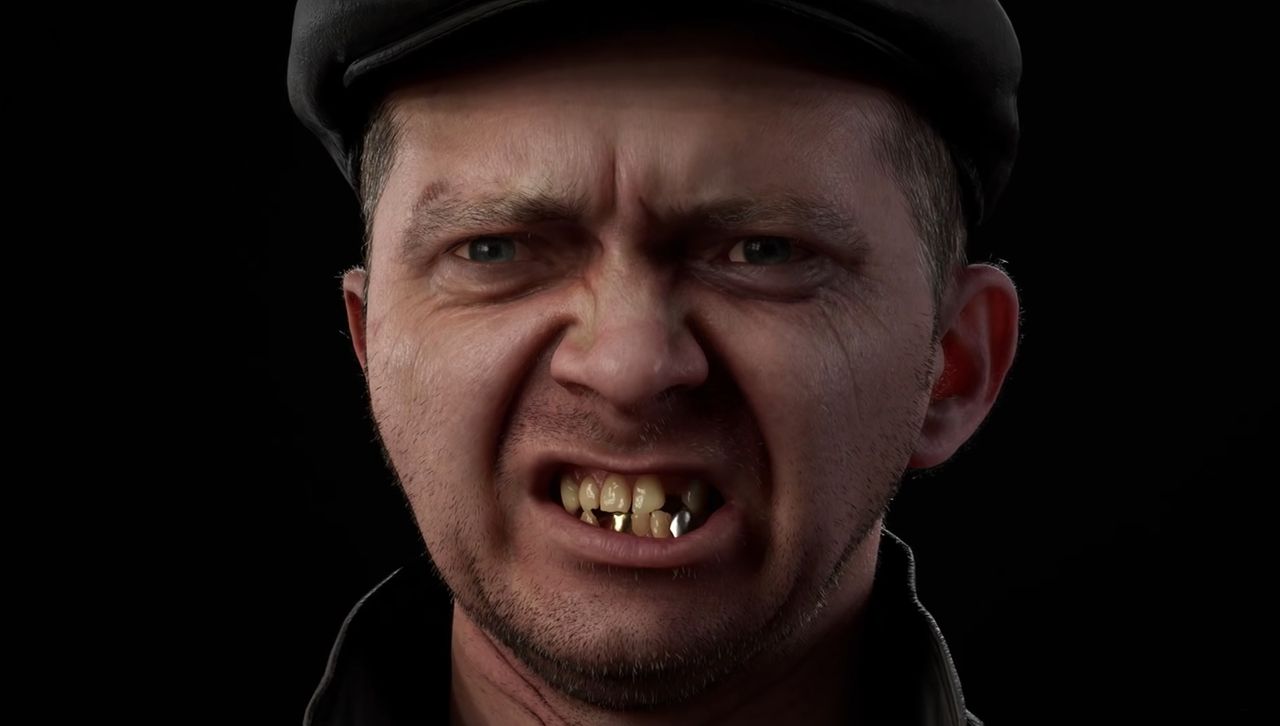
Boiling Point: Road to Hell from Ukraine—something of a punchline thanks to its floating jaguars, but unparalleled in its respect for player choice. In the fictional South American country of Realia, the first lead on the disappearance of your missing daughter could come from anywhere—the sassy old lady in the street, the editor of the local newspaper, the CIA man everyone pretends not to know is watching the town.
Some of the pillars that supported eurojank have rotted away
Over time these studios either became the new AAA, or faded into the background as companies with more money polished up their best ideas, sanding away the painful edges in the process. Still, eurojank persisted in relative obscurity. Germany in particular remained a holdout for crunchy RPGs, turn-based tactics and point-and-click adventures before Kickstarter made all of those things cool again.
It’s the stubbornness of eurojank companies, their refusal to die, that meant Belgium’s Larian was still around to take advantage of new crowdfunding models in the 2010s.
It took nearly bankrupting the studio more than once for Larian to arrive at Baldur's Gate 3, ultimately stealing Bioware’s crown without sacrificing any of the systemic absurdity that burbled away beneath the hood of the earlier Divinity games. One of those was a Diablo-style action RPG with tossable crates; another was an RTS in which you could marry a skeleton in a corset for political advantage.
(Image credit: Larian)
Today, it’s tempting to believe that eurojank is on top. Kingdom Come: Deliverance is every bit an ancestor of Gothic, while Stalker 2 was embraced as a triumph despite its rusted and abrasive corners. Pathologic 3… exists, which is not something fans of Russian steppe plague theatre ever dared expect 20 years ago.
Look deeper, though, and you’ll see that some of the pillars that supported eurojank have rotted away. French publisher Nacon, which bankrolled a number of eccentric European series in the past decade, filed for insolvency earlier this year. Now three of its subsidiaries have followed suit, including Styx studio Cyanide and Greedfall developer Spiders. A promising Gothic remake is coming, and yet the team who originated the series was shut down in 2024—poor Piranha Bytes caught up in the contractions of Embracer Group.
(Image credit: Daedalic)
While mid-budget game development will never truly go away, it’s becoming far harder to keep a team together long enough to define a particular—and perhaps peculiar—personality for their games. 2024’s perfectly decent bayou horror, Alone in the Dark, saw Pieces Interactive torn apart by Embracer after disappointing sales. And a decade and a half of point-and-click adventures wasn’t enough to save Daedalic’s development team from being swallowed up in the aftermath of its final misadventure, The Lord of the Rings: Gollum.
There may also be a secondary reason you don’t hear the term eurojank quite so much anymore: the games got less janky. Powerful and approachable game engines are now cheaply available to any budding developer. Resources like the GDC Vault and blogged postmortems have made it possible for even the most geographically isolated studios to discover industry best practices and apply them to their own projects. In 2026, you’re more likely to associate European gamemaking with Clair Obscur: Expedition 33, a vividly French game of enormous ambition that is nonetheless sensibly scoped and neatly packaged, than with overreaching hubris.
Then there’s Denmark’s Hitman, Austria’s No Rest for the Wicked, Ukraine’s Metro series. The list of slick continental produce goes on.
(Image credit: GSC Game World)
That change is, in many ways, for the betterment of all: players, developers, and journalists, who never want to be duped by pie-in-the-sky promises. Still, there’s a less logical part of me that misses the sensation of searching for moments of magic amid the broken code. And even less defensibly, the wistful quality of missed potential.
Around the same time I played Boiling Point, shooting and bribing my way around a mafia-controlled jungle, I was listening to The Libertines—a ramshackle indie band who assembled their soulful and spiky songs like shoddy tradesmen. Their music sounded as if it might fall apart at any second, and indeed the group did, right around the release of their second album. Almost as thrilling as the noise itself was the idea that, if only they could keep it together, these songs could be even better.
That, to me, will always be quintessential eurojank: the perverse pleasure of being burned by proximity to some Icarus-like creative force; a gaggle of unlikely geniuses with a blazingly beautiful idea they couldn’t quite see through.