Orbitals Reviews Say It Takes Two Is Still the Co-op Game to Beat
Overview & Key Takeaways
The reviews are in for Orbitals, and critics are charmed by the anime co-op game, though they have some big complaints too.
Five years ago, developer Hazelight cracked the co-op genre wide open with its award-winning It Takes Two. Surprisingly few developers have tried to replicate that success since then, but we've finally gotten a good attempt with Orbitals. Reviews for the anime-inspired co-op game just landed, and it looks like developer Shapefarm has mostly pulled off the task, though it's not quite up to the high standards Hazelight set.
As of the time of writing, Orbitals is sitting at an 81 on Metacritic and an 84 on Opencritic. While those aggregate scores are a bit far off from Hazelight's Split Fiction (a 91 on Metacritic), it should be enough to get some attention on Shapefarm's impressive debut.
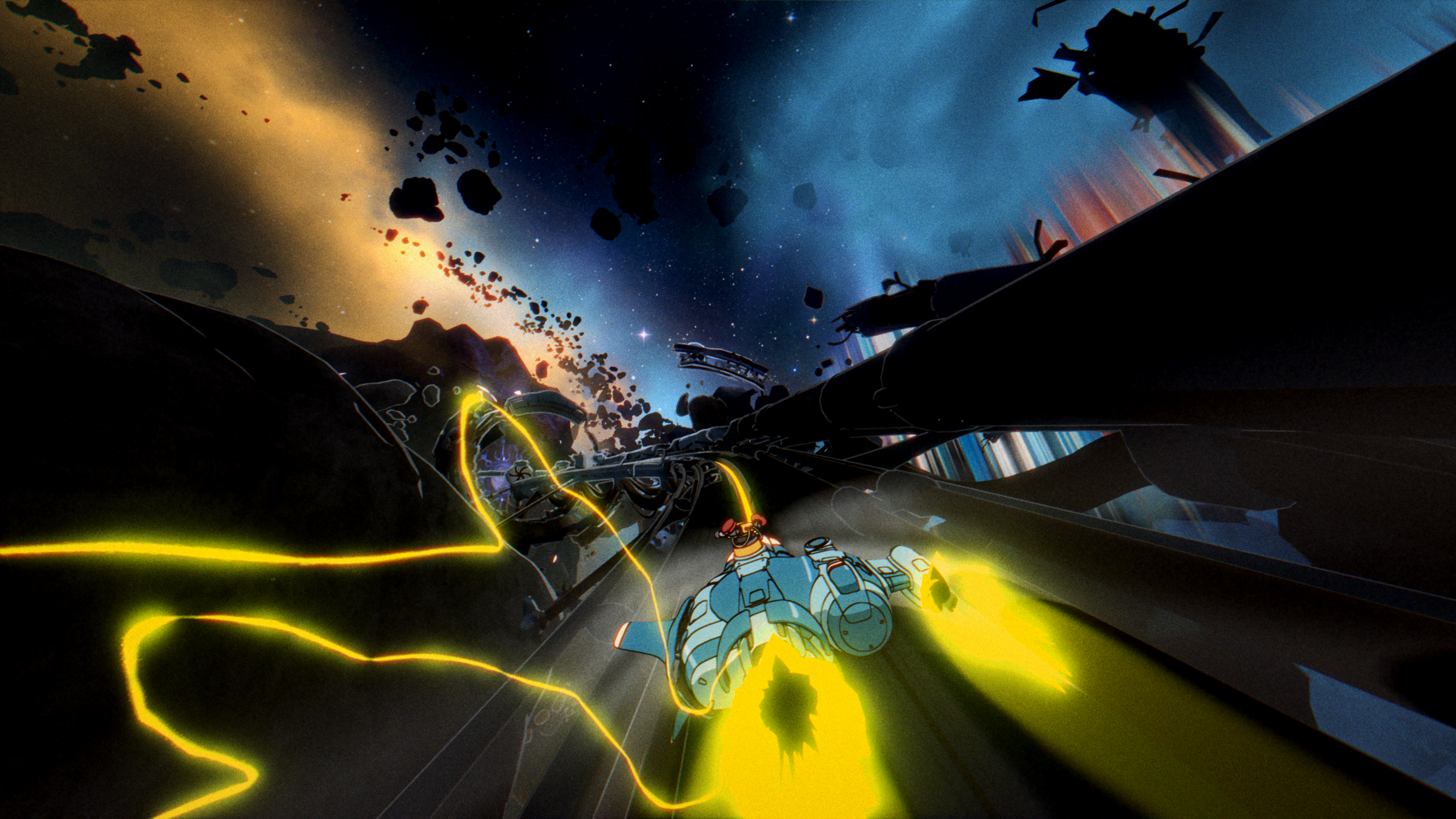
On the higher end of the spectrum, Game Rant weighed in with a glowing 9/10 review. Critic Austin King praised the game for its fantastic art and sound: "An amazing retro anime artstyle makes this game a real sight to behold," King wrote. That's a common bit of praise across the board.
Kaitlyn Peterson at TheGamer was similarly impressed, scoring Orbitals a 4/5. In addition to loving the anime aesthetics, Peterson had some praise for the co-op gameplay and the way it constantly makes sure both players are integral to solving puzzles.
"Orbitals delivered on this even beyond my initial expectations," Peterson wrote. "Maki and Omura each have their own roles for the mission, but nearly every aspect of the game, from exploring the world to defeating bosses, requires both players to work together, as they should. Nobody is ever just sitting on the sidelines."
 Image: Shapefarm/Kepler Interactive
While there's a good amount of love for Orbitals out there, other critics weren't quite as sold on the game beyond its art. In a 7/10 review, Game Informer's Charles Harte noted that the idea of Orbitals is great, but it falters on execution. It's dragged down by some shallow puzzle design, as well as clumsy spaceship segments.
"It's an engaging way to solve puzzles, with one of us moving obstacles and flipping switches and the other maneuvering, but I was regularly frustrated by the space combat," Harte wrote. "Dodging fast homing missiles was a consistently uncomfortable affair, and one late-game sequence was downright overwhelming."
Eurogamer was similarly critical in a three-star review. Critic Alex Spencer noted that while Orbitals looks and sounds great, it has some similar problems to Hazelight's game, including a nonsensical story. The unmemorable co-op puzzles aren't enough to make up for that, according to Spencer.
"Lightning certainly never strikes in the way it did with Split Fiction's hoverbike captcha sequence, or flatulent flying pigs, or the literal boundary pushing of its grand finale, or… You get the point," Spencer wrote. "I played that game eighteen months ago and can still rattle off a dozen moments like this. A few days after rolling credits on Orbitals, I'm having to look back over my screenshots as a memory-jogger."
Despite some mixed opinions on how well it comes together, critics across the board at least seem to be in agreement that its aesthetic does a lot of work to make Orbitals worth playing. Polygon's own Oli Welsh was especially won over by that aspect, dubbing Orbitals the best co-op game since It Takes Two. Considering how few developers have dared to follow Hazelight's lead, that might just be true even if Orbitals is flawed.