Latest Multi-platform Game News & Updates
☁ Multi-platform News
7001 articles 🎮 Multi-platform
Billionaire Gabe Newell Buys $70 Million Mansion With Its Own Tunnel To The Beach
Gabe Newell, the billionaire founder of Valve, has paid $70.8 million to buy a 20,000 square-foot seaside mega-mansion in Florida featuring seven bedrooms, 13 bathrooms, and an underground tunnel to the beach. The home was listed for sale in 2025 with an asking price of $85 million. It officially sold for $70,851,054 on June 15(https://www.zillow.com/homedetails/1660-S-Ocean-Blvd-Manalapan-FL-33462/103463336zpid/), or about 16% under the asking price. You can see many photos of the humble abode on Zillow(https://www.zillow.com/homedetails/1660-S-Ocean-Blvd-Manalapan-FL-33462/103463336zpid/). A video you can see below (from five years ago) takes you through the home. The Wall Street Journal(https://www.wsj.com/real-estate/luxury-homes/videogame-billionaire-buys-florida-home-for-70-8-million-fba9110c) said Newell was the purchaser of the home, which is right down the road from President Donald Trump's Mar-a-Lago resort. The previous owners were Cindy and Ron McMackin, who founded Pan-Pacific Mechanical. They bought the home in 2020 for about $39 million, so they certainly turned a nice profit on the sale to Newell. "We found a great family, it seems, to buy that home from us," Ron McMackin told WSJ. The home exists in the exclusive Manalapan community. Fellow billionaires Larry Ellison and David MacNeil also own homes in the community. Sean Hannity and Tony Robbins also live there. Billy Joel sold his Manalapan home in 2024 for $43 million. https://www.youtube.com/watch?v=dD5-8y3vTBM Newell's purchase of the Florida mansion came during a lawsuit against the company pertaining to monopoly concerns(https://www.gamespot.com/articles/valve-hit-with-new-lawsuit-over-steam-commissions/1100-6537689/). This was just the latest major purchase for Newell, as he owns a fleet of super-yachts as well(https://www.gamespot.com/articles/gabe-newell-gets-new-363-foot-superyacht-with-hospital-and-15-gaming-pcs-on-board/1100-6536271/). Valve is based in Bellevue, Washington, but Newell is known to do a lot of work from sea(https://www.gamespot.com/articles/gabe-newells-daily-routine-sounds-very-legit/1100-6533251/). Newell was visiting New Zealand when the COVID-19 pandemic broke out, and he had 48 hours to decide if he would stay or go(https://www.stuff.co.nz/business/industries/122227144/thank-you-new-zealand-us-gaming-billionaire-gabe-newell-happy-he-stayed-during-lockdown)--he stayed. Newell is not the first gaming billionaire to spend big money on a home. Markus "Notch" Persson, who created Minecraft and sold it to Microsoft, paid $70 million for a Beverly Hills mansion in 2014(https://www.gamespot.com/articles/minecraft-creator-notch-outbids-beyonce-and-jay-z/1100-6424311/), outbidding Beyonce and Jay-Z for it. Persson threw a housewarming party, and Selena Gomez dropped by(https://www.gamespot.com/articles/check-out-these-pictures-from-minecraft-creator-s/1100-6424649/).
 🟩 Xbox, Multi-platform
Microsoft Apparently Already Knew It Would Be Closing Ninja Theory When It Announced Senua
Earlier this week, it was reported that Microsoft was planning to close(https://www.gamespot.com/articles/double-fine-ninja-theory-and-more-reportedly-trying-to-spin-off-from-xbox-game-studios/), or spin out, Compulsion Games, Double Fine, Ninja Theory, and potential other studios as part of a round of layoffs(https://www.gamespot.com/articles/xbox-reportedly-planning-big-layoffs-for-next-month/) and studio closures. Now, a report suggests that Microsoft knew it planned to close Ninja Theory before the studio announced its new Hellblade game, Senua, during the Xbox Games Showcase(https://www.gamespot.com/articles/xbox-game-showcase-2026-all-the-biggest-announcements-so-far/) just ten days ago. According to Stephen Totilo's Game File(https://www.gamefile.news/p/xbox-studio-contraction), Microsoft "had already planned to sunset or split" with Ninja Theory by the time Senua's trailer debuted, thinking that a newly announced game would "draw investor interest." Totilo notes that it's unclear whether anyone in Ninja Theory's leadership team was involved with, or even aware of, that plan. The report follows a bumper interview that Xbox Wire(https://news.xbox.com/en-us/2026/06/07/senua-ninja-theory-details-interview-action-adventure-xbox-games-showcase-2026/) published about Senua, in which it said, "The original Hellblade famously ended with the line, 'There are more stories to tell.' Senua feels like Ninja Theory has expanded that to a philosophy of, 'There are new kinds of games to make.'" Ninja Theory studio head Dom Matthews also noted that the gap between Hellblade 2 and Senua being small is deliberate. "It’s not about rushing something out the door--we would never do that--but we want to ship games." https://youtu.be/H2eP2xtTEzw It began with Xbox CEO Asha Sharma's "reset" memo, which noted that Xbox has spent over $20 billion on ongoing investments, but that the annual revenue has declined almost half a billion in the same time. "Going forward, this cannot continue," Sharma said. That was followed immediately by Xbox Game Studios boss Craig Duncan stepping down. While Ninja Theory, Double Fine, and Compulsion are all reportedly in talks with Microsoft over potential buyouts, the studios will need investment to go independent if those negotiations are successful. Alongside those imminent threats, it remains to be seen whether Ninja Theory would even be permitted to take its Hellblade franchise with it wherever it goes. When Microsoft closed Lionhead, there was investment interest, but those talks didn't amount to anything since Microsoft was unwilling to let the Fable name go. It remains unclear what the future holds for the studios facing closure. There's a sliver of hope in the fact that Microsoft appears to be hoping for investors to buy the studios rather than shuttering them entirely, but only time will tell if that approach is successful.
 📱 Mobile, Multi-platform
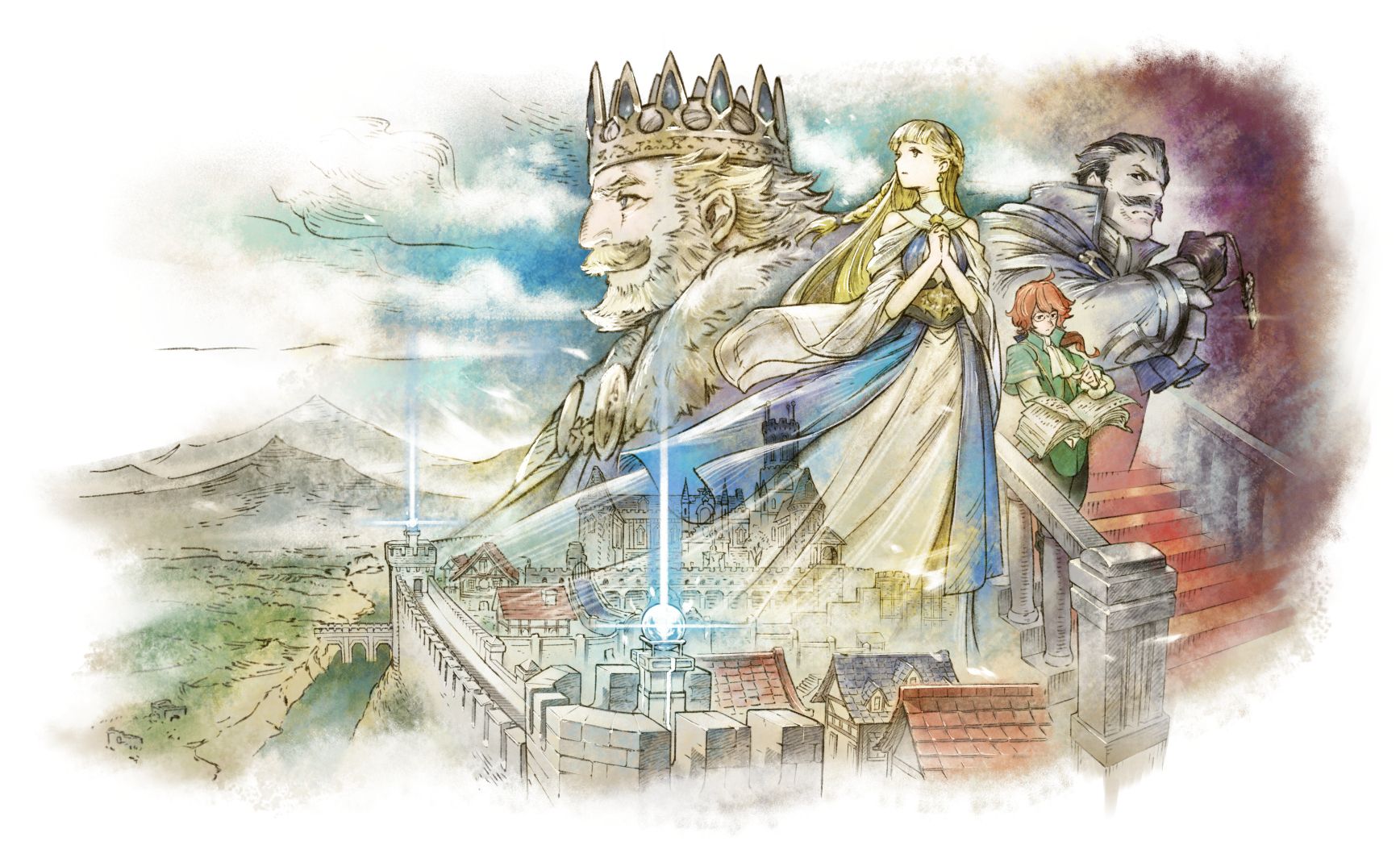
Adventures of Elliot review: a charming throwback RPG that respects your time
While the time-travel aspects are undercooked, Square Enix's latest feels like a SNES era classic you just never got around to
 🎮 Multi-platform
The Adventures Of Elliot: The Millennium Tales Makes A Strong Argument For Silent Protagonists
In a relatively short time, Team Asano at Square Enix has made a name for itself. Between the Bravely and Octopath series, it has become known for taking a fresh look at retro RPGs by experimenting with new ideas and visual styles, creating games that feel both familiar and new. The developer takes a similar approach when it comes to The Adventures of Elliot: The Millennium Tales, an action-adventure RPG that emulates the feel of a top-down Legend of Zelda or Mana game but uses the studio's signature HD-2D visual style. But while the action and adventuring are well-crafted, a dull story and verbose characters have the unfortunate tendency of deadening the momentum. The Adventures of Elliot takes place in the fictional kingdom of Philabieldia (try the cheesesteaks!), ruled by a kindly king and under the magical protection of his daughter. The area surrounding the castle grounds is beset by deadly beastmen and the princess' presence carries a passive spell of safety that keeps them at bay. Elliot is an Adventurer, an actual job title that appears to be some mixture of mercenary and wandering odd-job doer, and only Adventurers are known to travel outside the castle walls and brave the beasts. After a sinister duke discovers a method to go back in time to claim a powerful relic, Elliot follows him and thus begins hopping between different eras, going further and further back in his kingdom's history. In terms of sheer mechanics, The Adventures of Elliot is a modest but welcome step forward for the genre. This HD-2D visual style works so well for a top-down Zelda-style adventure game that you would never know it had been created for turn-based RPGs. The combat is sharp and responsive, and the diorama-like presentation gives you a very clear idea of where the enemy threats are coming from. Elliot gets a wide variety of weapons, ranging from his basic sword to a heavy hammer, boomerang, and consumables like arrows and bombs, along with some less conventional weaponry like a spear or chain scythe. Each weapon has its own advantages and disadvantages in combat and as you find upgraded versions of each, they get stronger, charged effects that can have a big impact on the battlefield. Elliot also has a shield for blocking and parrying enemy attacks, adding a little more defensive nuance, and a dedicated jump, which is used for traversal and light platforming, especially within dungeons, but can also be used offensively depending on your build. True to its classic inspirations, Elliot only features a relatively small pool of enemies, with palette swaps representing stronger variants with new abilities. But it manages to offer a good variety of fast-paced combat encounters as these enemy types are mixed together. Combat scenarios are quick and snappy so even though I could run past them when I was in a rush, I would usually stop to fight just for the fun of taking down some monsters. That's the mark of a strong combat system. Shortly after beginning on his quest, Elliot is joined by Faie, a squeaky-voiced little fairy that only he can see and hear. She's his constant companion throughout the rest of the game, offering her own commentary and being a sounding-board for Elliot to think through his next steps. She also gains a number of magical powers, letting her light torches, teleport Elliot across gaps, and more. You can freely move Faie around within a certain radius of Elliot with the right stick, which makes her feel like a natural extension of Elliot's, and thus your, power set. Most of her powers aren't necessary to complete dungeons, but it's so much fun to "cheat" through puzzles with them, incentivizing you to explore the specially marked ruins that upgrade her powers. During the mirror dungeon, for example, I pulled a mirror to reflect a laser in a way necessary to solve a puzzle, only to discover that I trapped myself in a corner with a gap. However, thanks to Faie, I was able to teleport my way out of the problem. That may not have been the way I was meant to solve the puzzle, but it was nice that I had the opportunity to find my own way. !(https://www.gamespot.com/wp-content/uploads/2026/06/ssf1cf396b5bcf3cfb17561c41cf4646b6b883c5f1.1920x1080.jpg?w=1024) The Adventures of Elliot: The Millennium Tales The dungeon design throughout the game is well-crafted, even if most of them don't feel particularly distinct. This whole game is homage to classics like the 2D Zelda games, and you can particularly sense that in the dungeons. They iterate with ideas like the aforementioned laser-mirror reflection dungeon, or a dungeon in which I had to raise and lower water levels. In each of these dungeons, the addition of Faie's ability set gives you more room for creative experimentation and finding clever solutions that may not have been exactly intended. Elliot can also enhance his abilities with Magicite, a very flexible upgrade system. Equipped Magicite can enhance your attack power, give passive bonuses (like increased hammer knockback), or change weapon properties (like giving you piercing arrows or a second boomerang to throw while the first one is still out). Each piece of equipment has its own Magicite box with a certain amount of slots, and you can both find pieces of Magicite in the world or turn in fragments to get random ones, gacha-style. After you've upgraded enough, your total level goes up and you get even better Magicite, so it's always worth it to be on the lookout for fragments. You can really get into the nitty-gritty of managing Magicite to optimize your build, but if you don't want to worry about it, there's also a quick-command option to let Faie create a build for you, which she does decently well to make a balanced set. There are also accessory slots, which can change your style in even more meaningful ways. Accessories can provide several different perks, such as preventing you from getting stunned, creating a shockwave that stuns enemies whenever you land from a jump, or turning every tossable object into a bomb. I found one that gave Elliot a hovering effect on his regular jump and kept it equipped for the entire game because it was so helpful to the dungeon platforming. And then there are just thoughtful convenience features that help modernize and sand off the rough edges. Sidequests are clearly marked with a visual indicator and a dedicated menu showing the character it centers around, and you're given ample warning if the next step in a story quest chain will nullify an ongoing sidequest. As you discover more eras, you'll often have to jump back and forth between them, which is easy because there are guideposts littered throughout the map in every era. And while waypointing can be a little difficult due to winding pathways, the overall map layout remains relatively similar in each era, which helps you to keep your bearings. !(https://www.gamespot.com/wp-content/uploads/2026/06/ss07a2f6af05397ab6917494b94007cf3f2c252084.1920x1080.jpg?w=1024) The Adventures of Elliot: The Millennium Tales As I've been playing The Adventures of Elliot, though, I've been thinking a lot about the trope of the silent protagonist. Classics like The Legend of Zelda have been known for their hero being remarkably quiet while the action occurs around them. Much has been said about this particular odd remnant of early video games, but in Elliot we can see an example of what it's like to have that type of character written with a voice. Elliot is remarkably earnest, even hokey, and everyone who knows or encounters him comes away feeling that he's just a swell guy. His personality often borders on feeling cloying and treacly. But at the same time, a character like this almost has to be written this way, because how else do you justify his status as a wandering do-gooder? Sometimes other characters hint at Elliot being a mercenary and taking payments, but it's clear that he does most of his work pro bono, or accepts whatever people can offer. So instead of a Link-like character who accepts his fated quest with quiet dignity--onto which we as the player can map whatever internal motivations we want--we have to stop and listen to exhaustive explanations that don't add much interesting shading or texture to the character. What does Elliot want? To be a helpful, great guy. What does everyone think of him? That he's a helpful, great guy. This type of character is mostly a cipher, so they make him utterly good-natured and well-liked and wise, instead of simply silent. But it's not just Elliot. Faie is equally chatty and her tone is even more sickly sweet than Elliot, though you can toggle an option to make her chime in less during your exploration. And almost every quest-giver you encounter explains their motivations and their own stories in exhaustive detail. The classics that inspired Adventures of Elliot were forced into an economy of language and would get their points across with a few sentences or a paragraph at most. Without those limiters in place, these cutscenes feel overlong and overexplained. They also often stop to slowly pan over to show a point-of-interest nearby. Checking in to advance the story between dungeons just slows the pace to a crawl. Adventures of Elliot also struggles to really capitalize on its time-hopping premise, largely because its different time periods are so nebulous. The concept appears visually and thematically inspired by Chrono Trigger. But one element that made Chrono Trigger's era-spanning story work so well is that it mapped more-or-less recognizably onto actual historical periods. You begin in a pastiche of rural modernism with burgeoning machines, travel back to something like the Dark Ages, and forward into the archetypal post-apocalyptic future. Those were marked with years to give us a sense of space and change--only 400 years passed between the dark ages and the modern era, but 1,300 years between the modern era and the apocalyptic future. When you travel to the age of primal humans and dinosaurs, it's millions of years instead of hundreds. The variance helped to establish the profound differences in time periods. !(https://www.gamespot.com/wp-content/uploads/2026/06/ssac0958ad179a4cbaa581f1486607407433252c01.1920x1080.jpg?w=1024) The Adventures of Elliot: The Millennium Tales Adventures of Elliot's time periods are more vague. We explore four time periods in total that help us understand the essential sequence of historical events in this world as we travel further backward. There was a great magical society that collapsed into ruination. The modern (default) era from which Elliot hails has recovered largely due to the influence of a great king, but none of the periods map cleanly onto real-world history, and they aren't separated by clearly defined spans of time. The map remains largely the same, which is helpful for navigation, but it also makes it feel like not much has changed in this world over long stretches of time. There are moments where the idea of an adventure spanning generations shines through. One side quest showed a bar owner treating his employees poorly until I went back in time and accidentally taught his ancestor about basic kindness, and then I got to see that lesson passed down through the generations and impact the future. Moments like that, and occasional story beats that I won't spoil, did remind me of how you could see your actions echo through time in video games like Chrono Trigger. The Adventures of Elliot just doesn't reach quite the same heights. The Adventures of Elliot: The Millennium Tales is a surprisingly strong first attempt at reaching into this genre from a studio not known for it. The combat is snappy and fun, with loads of build customization and ability tailoring to your style. The dungeon designs are well-crafted homages that allow room for creative problem solving, and the HD-2D visual style is lovely for this type of game. I was left wanting for a story I cared more about, with characters that were more three-dimensional, in a world that felt alive and took better advantage of its time-travel concept. Those factors make the game fall short, but it creates a foundation that I hope Square Enix builds upon.
 🖥 PC, Multi-platform
Final Fantasy meets Zelda? Yes, please
Let's be real: There's no shortage of Zelda-style games to play right now. That's true even if you've exhausted all there is to see in Tears of the Kingdom or Echoes of Wisdom. Indie developers keep finding new ways to refresh the formula, whether it's fusing it with a Soulslike, making it cozier, or simply &8230;
 🎮 Multi-platform
15 years later, Green Lantern remains Ryan Reynolds' most important failure
Ryan Reynolds learned hard lessons from Green Lantern's failure that ultimately helped pave the way for Deadpool and a thriving career.
 🎮 Multi-platform
Tom Holland's Spider-Man: Brand New Day aims to beat out Avengers and Taylor Swift in new record
Tom Holland's Spider-Man: Brand New Day is set to break records and beat out Taylor Swift's The Eras Tour and Avengers: Endgame in pre-sale revenue.
 🎮 Multi-platform
Kagurabachi manga goes on short hiatus following anime announcement
Shonen Jump's most popular new generation manga is entering a hiatus this summer to give the author time to rest.
 🎮 Multi-platform
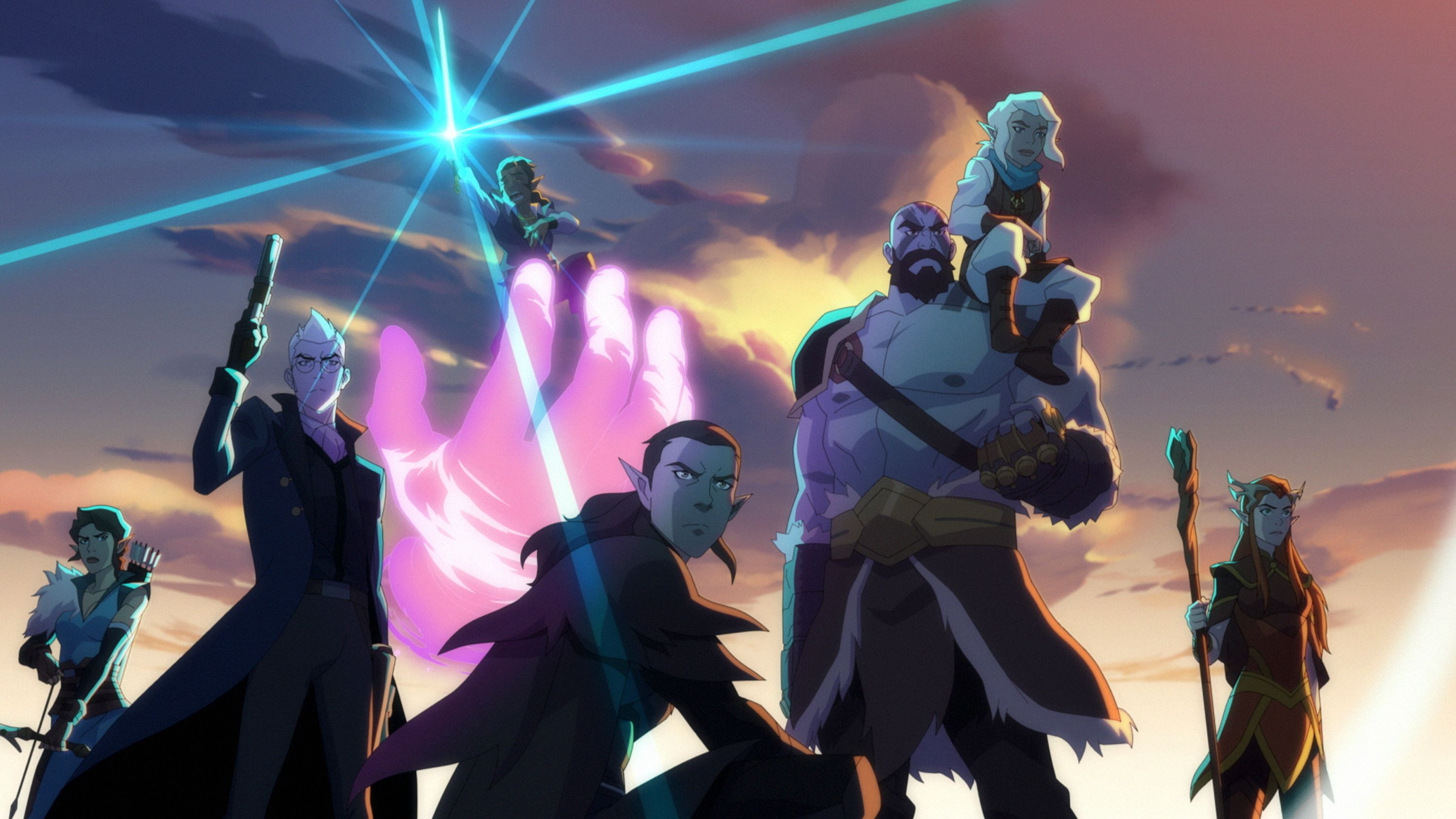
Legend of Vox Machina season 4 just introduced a Critical Role Campaign 3 character
In a surprising twist, The Legend of Vox Machina introduces a character from Critical Role's Campaign 3 way earlier than expected.
 🎮 Multi-platform
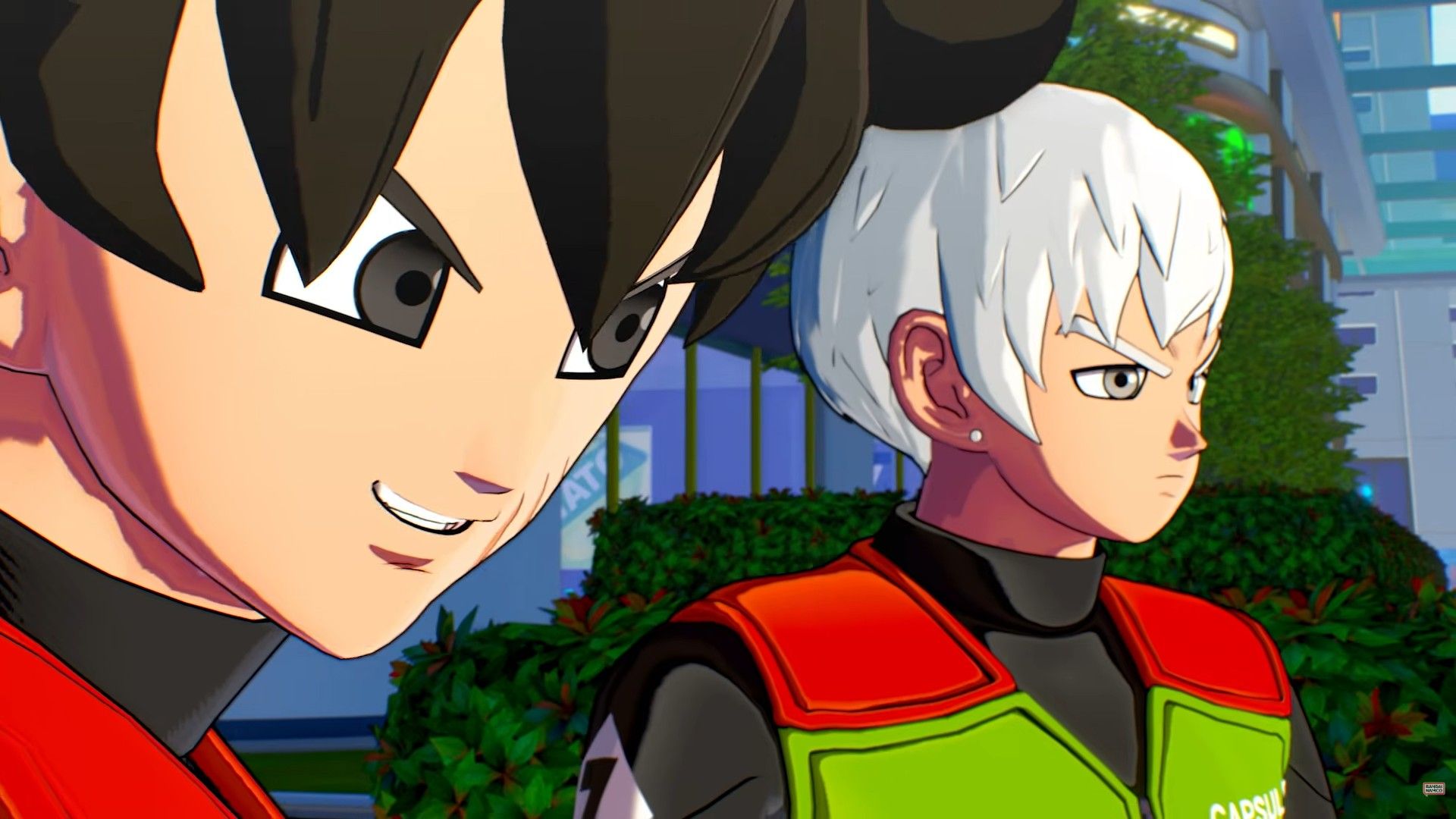
New Dragon Ball Xenoverse 3 info reveals game mechanics
The latest issue of V Jump includes new info on Dragon Ball Xenoverse 3's mechanics and battle system.
 🎮 Multi-platform
Widow's Bay season 1 ending explained by director, plus a season 2 teaser
Widow's Bay director Hiro Murai breaks down season 1's wild ending and what it means for season 2.
 🎮 PlayStation, Xbox, Multi-platform
Weeks After Launching A Great Game On Game Pass, Dev Lays Off Its Staff
Late last month, Kwalee Labs launched its first-person horror shooter Luna Abyss(https://www.gamespot.com/games/luna-abyss/) on Xbox Series X|S, PlayStation 5, and PC. But not even a day-one Game Pass release was apparently enough to save the jobs of the team that made Luna Abyss. Kwalee Labs CEO and production director Hollie Emery announced on her LinkedIn page(https://www.linkedin.com/posts/hollie-emery-074a625bhey-folks-i-have-some-sad-news-from-the-share-7472658276480946177-QHk2/) that she and the other eight members of Luna Abyss's development team were laid off earlier this week for undisclosed reasons. "Unfortunately as of yesterday, the entire team has been made redundant; a decision that was completely outside of our control," wrote Emery. "As a result, the entire team are available for work as of today." Emery also stated that she and the rest of her team were "enamoured by the love and support it received both by our industry and critically by journalists and media. Whilst we faced many challenges along the way, it has been the highlight of our careers--and we are incredibly proud that it has finally seen the light of day." According GameSpot's sister site Metacritic(https://www.metacritic.com/game/luna-abyss/), Luna Abyss had an 81% score and was largely received well by critics. While the title's Game Pass numbers aren't available, its peak concurrent players on Steam(https://steamdb.info/app/1933000/charts/) was 18,597 near launch. However, its most recent 24-hour peak was only 310 players, which marks a dramatic drop-off. Luna Abyss puts players in control of Fawkes, a woman who has been imprisoned on a moon called Luna and tasked to excavate and explore the deep passages beneath the surface while monitored by her A.I. prison guard, Aylin. As Fawkes uncovers the secrets of Luna, she's forced to fight for her life against cosmic horrors that defy description. Presumably Luna Abyss will remain available on its current platforms. The layoffs of Kwalee Labs' developers comes at a time when even prominent first-party studios at Xbox are currently negotiating with Microsoft(https://www.gamespot.com/articles/double-fine-ninja-theory-and-more-reportedly-trying-to-spin-off-from-xbox-game-studios/) to avoid being shut down. The final fate of those studios is currently unclear.