Latest Pc, multi-platform Game News & Updates
☁ Pc, multi-platform News
444 articles
Epic Games Store's New Free PC Game Revealed: Claim It for a Limited Time
The Epic Games Store has a selection of free PC games that changes every week. The latest free offerings will be available until Aug. 13.

Jurassic Park Meets Alien In This Childhood Dream Turned Horror Game
Revealed during PlayStation's State of Play earlier this year, The Lost Wild(https://www.gamespot.com/games/the-lost-wild/) is a first-person horror game that combines the awe of walking amongst dinosaurs, such as in Jurassic Park, with the terror of being hunted by a creature you can't defeat, à la Alien: Isolation. For Great Ape Games CEO Nick Gregory, it's a lot more than that; it's the culmination of an idea he's had in his mind since childhood. GameSpot recently caught up with Gregory via email to discuss the more than 20-year journey from boyhood dream to a Steam wishlist darling. He spoke to his team's growth as the project shifted to a full-time job, The Lost Wild's humble origins before he even knew how to really make games, and the subtleties of depicting dinosaurs as "animals, not monsters." GameSpot: As I understand it, this game began as a Crysis mod. Can you talk about the long journey from that to where it is today? Nick Gregory: Believe it or not, this actually goes back even further than the Crysis mod. I was a teenager living with my mum, over two decades ago now. I was lucky enough to get a PC at that age, and it opened the door for me not only to gaming, but to tinkering too. It was not quite the proverbial garden shed, but it changed the course of my life all the same. I first started tinkering with a game called Operation Flashpoint, a military sandbox game that shipped with a mission editor and extensive modding tools. I began with simple things like placing units, creating waypoints and setting up event logic, then gradually moved into custom mission scripts and assets. That period exposed me to a whole lot, learning how to model, script, keyframe, and design. None of it was remotely close to shippable quality, but it was an honest, naive, and practical crash course, driven entirely by passion and curiosity. A few years later, I went through the same process with Crysis and CryEngine. The technology felt like a huge leap forward. Crysis shipped with its editor, and being able to load the game, fly around the world, and change things in real time felt extraordinary. It's easy to take that kind of workflow for granted nowadays, but at the time it was transformative. I joined the Crymod forums and became fascinated by what people were making with the SDK: maps, models, skins, full conversions. I would come home and see what everyone had created, and eventually I stopped wanting simply to observe it. I wanted to be part of it. So I decided to find out what a dinosaur might look like in CryEngine. I wanted to know what it might feel like to walk alongside one in a natural environment, where it behaved like an animal rather than a mindless monster. That was the original vision, and it grew from there. The first dinosaur looked surprisingly good, so I began posting work-in-progress images online. Those posts gradually attracted people who believed in the idea, and before long we'd assembled a volunteer team of around 15 developers: artists, level designers, programmers and sound designers. Several of them now hold senior positions across the games industry. One of those people was Tim, who joined us straight out of university, believed deeply in the project and is now a fellow co-founder and Creative Director. I was never the strongest developer. I was very much a kitbasher and generalist, but I discovered that I had an ability to establish a vision and a clear “why,” find talented people, bring them together, and articulate why an idea was worth pursuing. That has stayed with me throughout my career and still shapes how I run the studio today. We improvised constantly. At one point, we retrofitted Crytek's chicken AI to make one of our dinosaurs semi-functional. We were a million miles from producing a complete game, but the journey mattered far more than the destination for me. We formed lifelong friendships, learned an enormous amount, and eventually had the mod featured in a full-page article in PC Gamer, which was an incredible moment for a group of people building something from their bedrooms. Looking back, I think of that work less as an early version of the game and more as a piece of interactive 3D concept art. It proved there was something compelling at the heart of the idea, and it established the relationships and conviction that would eventually make the game possible. The idea stayed with me for nearly two decades, until we finally had the experience, technology, and opportunity to return to it and execute on it with a lot more knowledge and know-how. So the journey from that mod to The Lost Wild was anything but a straight line. Looking back, it is surreal that a simple idea I had as a teenager could stay with me for so long and directly or indirectly shape so many of the decisions that followed. We still talk about how wild it is to this day. !(https://www.gamespot.com/wp-content/uploads/2026/08/ssebf9b079c3587e872b32b8a3bca13803767ac319.1920x1080.jpg?w=636) The Lost Wild has taken Nick Gregory 20+ years to bring to life, but it's now nearly here. When, if ever, did The Lost Wild become your main focus/full-time job? For several years, The Lost Wild was something we built around full-time jobs and other responsibilities. We spent our evenings and weekends developing a vertical slice because we felt it was important to show the game itself, rather than rely on a polished presentation and promises about what it might eventually become if everything went to plan. It was not easy. There were a lot of late nights, missed weekends, and personal savings poured into something with no guarantee that it would ever become more than an idea. It required a real sacrifice that, in hindsight, was now absolutely worth it. The major turning point came when we signed with Annapurna. Since then, The Lost Wild has been the studio’s full-time focus. Their support allowed us to grow the team, move into full production, and take the project from that early vertical slice towards the game we are now preparing to release. So it was a gradual journey rather than a single overnight moment, but signing with Annapurna absolutely made this dream possible. What's the size of the team making the game today, and how has that differed from its earliest version? When we first began working on the game full time, the core team consisted of just four people: myself, my co-founders Tim and David, and Dennis, a very talented freelance programmer at the time, who eventually joined us full time and is still with the studio today. Today, the team has grown considerably. We now have eighteen staff based in the UK and a further nine full-time, salaried team members working internationally. We also collaborate with a number of co-development partners and contractors whose contributions are equally important to the game. Including everyone actively involved in development, the entire effort currently sits at around 30 people. It is a significant change from those earliest days, but we have tried to grow carefully and build the team around the specific needs of both the game and the studio, while also thinking about what comes next. Why dinosaurs? What is it that made you want to make such a game? I grew up on films like Jurassic Park, Jaws, Alien, and E.T. are just a few of them. I loved movies, and still do, so I probably had no choice but to be shaped by them. But I was always a gamer at heart, and I think that naturally made me want to take those feelings and turn them into something you could inhabit rather than simply watch. For me, dinosaurs occupy a fascinating space between the familiar and the unknowable. Everyone recognizes them, but our understanding of how these extinct animals actually moved, behaved, and interacted can only ever be reconstructed from the evidence they left behind. Paleontology can tell us an enormous amount, yet there are still gaps in our understanding, and those gaps leave room for imagination and curiosity. The appeal was never simply about wanting to see a dinosaur up close. I wanted to experience them as animals. I wanted to see them moving through a natural environment, hunting, reacting, and existing without behaving like monsters. At the same time, I wanted to capture the reverence and natural horror that might come from actually encountering one in the wild. There is something very primal about that idea. It is a mixture of fascination, awe, and fear. You are looking at something extraordinary and beautiful, but also something powerful, unpredictable, and completely indifferent to you. Of course, it is all hypothetical, but it became a scratch I needed to itch. In many ways, the game is my attempt to try and recreate the feelings those films gave me as a kid, but in a form where you are no longer sitting safely on the other side of the screen, but interacting with something instead. How scary do you want the game to be? My hope is for The Lost Wild to be genuinely frightening, but not relentlessly so. The horror comes through observation, instinct, and restraint. It comes from feeling vulnerable, sharing an environment with powerful animals and never being entirely certain how they will respond. If every dinosaur simply attacked on sight, it would stop feeling like an animal and become a conventional monster. Just as importantly, the fear has to sit alongside awe, fascination and respect. We want anticipation and uncertainty to do as much work as the encounters themselves. Ideally, players never feel completely in control, but there is still space to appreciate the animals and the world they inhabit and genuinely be fascinated by them - even when one may be trying to eat you. What was it like designing the main character and who she is? What did you find important about creating this character? Saskia was important to us from very early on, because the entire experience is filtered through her. She is not a soldier or a scientist or a hero; she is an ordinary person thrown into an extraordinary situation. She wakes up on the island after a car crash and gradually realizes that dinosaurs are real, that the island belongs to a mysterious company called Idehama, and that she has no idea how she got there or how she is going to get out. That ordinariness was the whole point. The question we kept coming back to was simply, “if I were there, what would I do?”, and Saskia is our way of putting the player inside that question. The challenge was finding the balance between giving her enough personality to what we hope feels like a real, defined person while still leaving enough space for the player to inhabit her decisions. She is capable and resourceful, but she is not combat-trained. We also wanted her story to be something you uncover rather than something we force upon you. Saskia’s journey is shared with the player’s, and is the grounding rod in the game. !(https://www.gamespot.com/wp-content/uploads/2026/08/the.lost.wild.posteronline.jpg?w=636) Today, publisher Annapurna is revealing a new poster for The Lost Wild. Do you find it odd how relatively few dinosaur games there are? We see other enemy themes like zombies, raiders, or aliens so often. Why do you think we have so few dino games? This is such a great question because it’s so close to home for me. On the face of it, I have always wished there were more dinosaur games in general, particularly when you consider how universally loved dinosaurs are. Almost everyone has a dinosaur phase at some point, so it seems like an obvious subject for games. But I think the scarcity tells you something about how genuinely difficult they are to get right. There are, of course, dinosaur games, but they are also technically difficult and hard to make convincing in my opinion. For us, that difficulty was part of the appeal. We wanted the freedom to build our own world and explore our own “what if,” rather than simply imitate what had come before. Where other people might see challenges, we saw it as a chance to do something on our own terms. If I recall rightly, the folks at the Summer Game Fest demo said the dinosaurs in The Lost Wild are “animals, not monsters.” I found this to be a really interesting nuance. What do you feel is the important distinction, given the game does feature the dinos sniffing you out and hunting you down? The distinction is really about motivation rather than danger. A monster exists to menace the player. It notices you the instant you enter the room, it fixates on you, and everything it does is built around threatening the person holding the controller. An animal does not care that you are the protagonist. You are simply another thing moving through its world. The fact that it might hunt you does not make it a monster; it makes it a predator behaving as a predator might. We were very deliberate about not reducing those encounters to conventional combat puzzles with obvious weak points You watch where an animal is looking before you move. You learn how it responds to sound, how it occupies a space, and when its attention may have shifted elsewhere. You are not equipped to kill the dinosaurs, but you can find non-lethal tools that help you create distractions, deter an approach or buy enough time to escape. Survival comes from evading, hiding, and using the environment rather than overpowering them. And crucially, that framing is what leaves room for awe. If every dinosaur charged you on sight, you would only ever feel hunted. Because they behave like animals, there are moments where you can watch one and feel genuine wonder before the fear sets back in. They are not villains; they are creatures behaving as they should, and that produces a more complicated emotional response, one that blends fear with fascination and respect, I think. The danger is a consequence of what they are, not the entire reason they exist. I've likened the game to Alien: Isolation. Do you feel that was an inspiration? Any other inspirations you'd call out, especially those that may not be so obvious? It is a very fair comparison, and in our case it runs deeper than a surface resemblance. Our game director, Gary Napper, worked on Alien: Isolation, so there is first-hand experience within the team of how powerful vulnerability, restraint and anticipation can be. Knowing when to show a creature, when to hold back and when to let the player’s imagination do the work are all things we think about very carefully. That said, we are not trying to replace the xenomorph with a dinosaur. Our animals have their own behaviors, and their presence has to leave room for exploration, fascination, and awe as well as fear. Beyond games, a lot of our influence comes from the natural world. The original Jurassic Park is a clear example for reverence and scale, but Jaws matters to me just as much because so much of its terror lives in what you do not see, and in the anticipation of the threat rather than the threat itself. The less obvious inspiration is wildlife filmmaking and real predator behavior. The patience, observation, and respect for an animal as an animal are things we think about constantly, because grounded behavior is what makes the whole experience convincing. We’ve watched all the dinosaur documentaries and YouTube videos, and are deep down dinosaur nerds at heart. Alien: Isolation is a useful reference for the feeling of being hunted. Nature is the reference for how we want the hunter to feel. https://www.youtube.com/watch?v=A-frigam660 The Lost Wild seemed to capture a lot of wishlists on Steam(https://store.steampowered.com/search/?filter=popularwishlist) after its reveal. What effect does that have on the team this far out from launch? Is it purely an emotional boost or does it have other benefits, too? It is absolutely an emotional boost, and I do not want to downplay that because it matters enormously. For a project that began with a small group of us working during evenings and weekends, seeing that level of interest is deeply validating. It tells us that the thing we believed in for so long resonates with people we have never met, and that is a wonderful feeling to have. But it is far more than a morale lift. Wishlists are a real signal, both to us and to our publisher. They are one of the clearest indications we have that the premise and presentation are connecting with an audience. Every wishlist is effectively someone saying, “You have my attention.” Our job is to earn the rest. Does the team have any policy or opinions on generative AI? Our position is straightforward. No generative AI content has been used in The Lost Wild. The art, writing, performances, audio, and other creative work in the game are the work of our team and development partners. We want the game to reflect the craft and authorship of the people making it. The Lost Wild is due out in 2027 on PlayStation 5(https://store.playstation.com/en-us/concept/10014955/) and PC(https://store.steampowered.com/app/1952620/TheLostWild/).
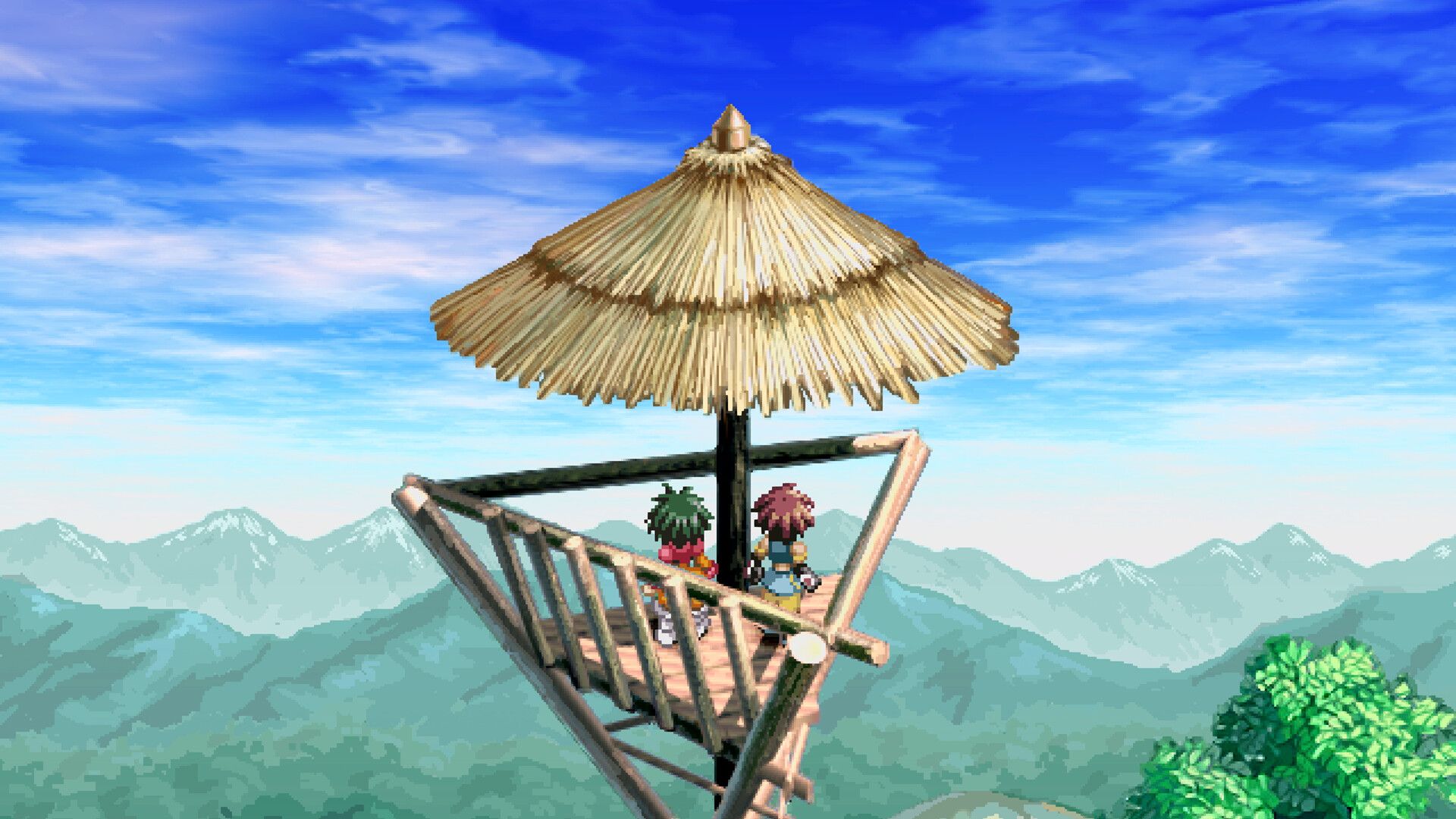
Final Fantasy's Biggest Competition Officially Returns In 2026
Bandai Namco's Tales series comes back to consoles and PC in October, and this remaster's got PS1-era style to spare
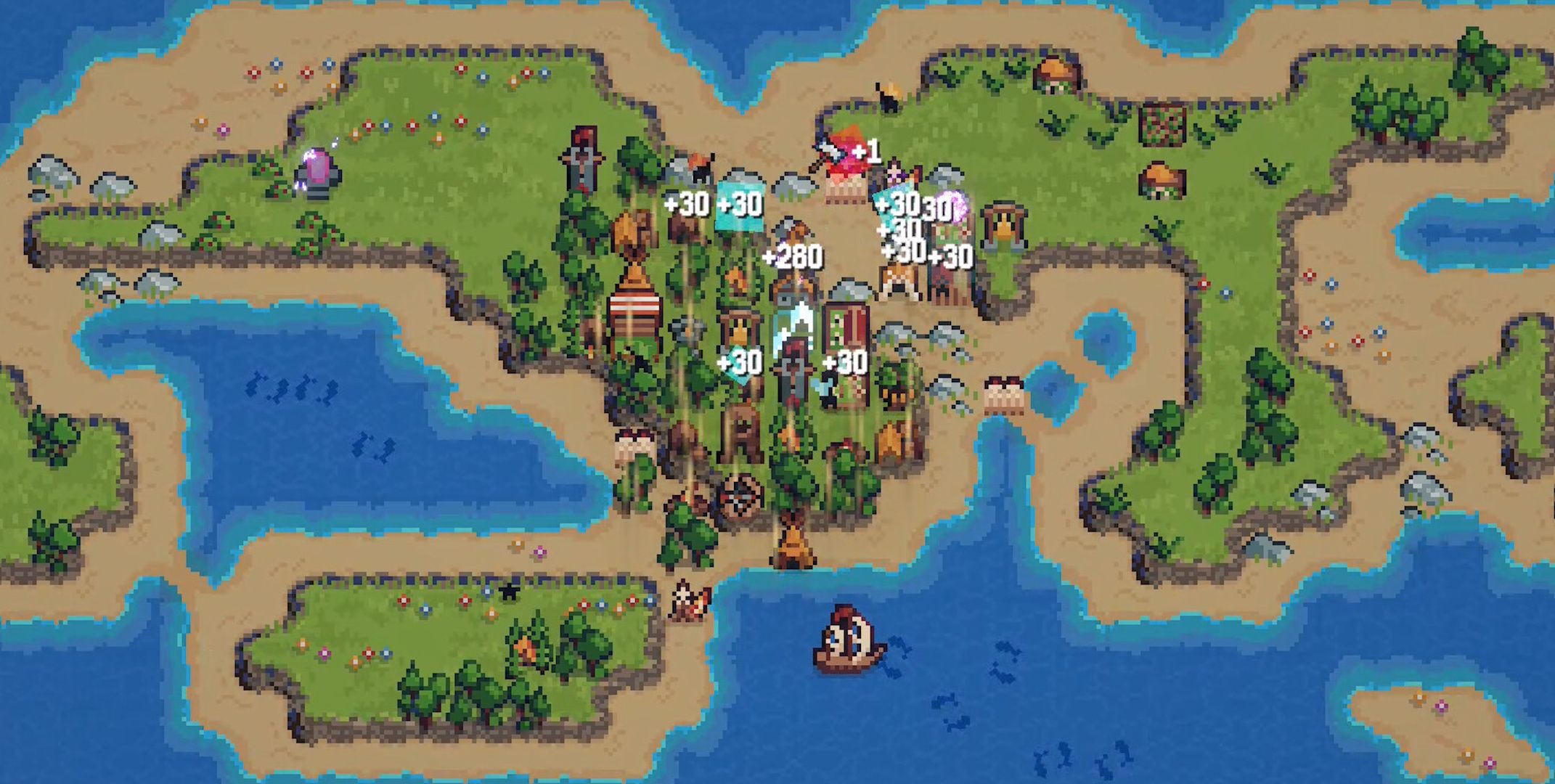
Cities Skylines meets Balatro in the excellent new roguelike city builder Combolands
Combolands combines the combo-chaining thrills of Balatro with the strategic placement of Cities: Skylines

New Bully-Like Agefield High Isn’t Having The Best First Day Of School
After a story trailer(https://www.gamespot.com/articles/this-new-pc-game-lets-players-live-out-their-teen-comedy-dreams/1100-6536107/) got Bully fans excited for the spiritual successor Agefield High: Rock The School last year, the game has officially released on PC. Unfortunately, first impressions from players aren't so kind, so you may want to temper your expectations that it could match the high bar Rockstar set so long ago. Set in the early 2000s and inspired by the humor of movies like American Pie, Agefield High's developers warn on the Steam page that this humor isn't for everyone. However, the complaints from players seem to be more with how the game runs on a basic level. Numerous Steam reviews mention the characters' very stiff animations, crashing issues, sluggish and imprecise combat, and lag, even when on very low PC settings. !(https://www.gamespot.com/wp-content/uploads/2026/08/dc65990d587600e90116061b6d7a207c020cb765.jpg) The last thing you see before you die Our own Jean-Luc Seipke has spent some time with Agefield High, as well, and they echo many of these same complaints, as well as the writing, so those who just want to experience the story might not have a great time either. At the very least, however, there isn't AI-generated art(https://steamcommunity.com/app/3562580/discussions/0/590686595450962284/?snr=159) in it. It appears developer/publisher Refugium Games may have acknowledged these rough edges in a Steam post(https://store.steampowered.com/news/app/3562580/view/685262187621515365?l=english). Written in-character as Principal Carpenter, it says, "Please be gentle with the walls. The paint is still fresh." Perhaps everything will work more as expected once that paint has dried, but for now, it sounds like you'd have a better time just tracking down a used copy of Bully and not spending nearly $30 for Agefield High.
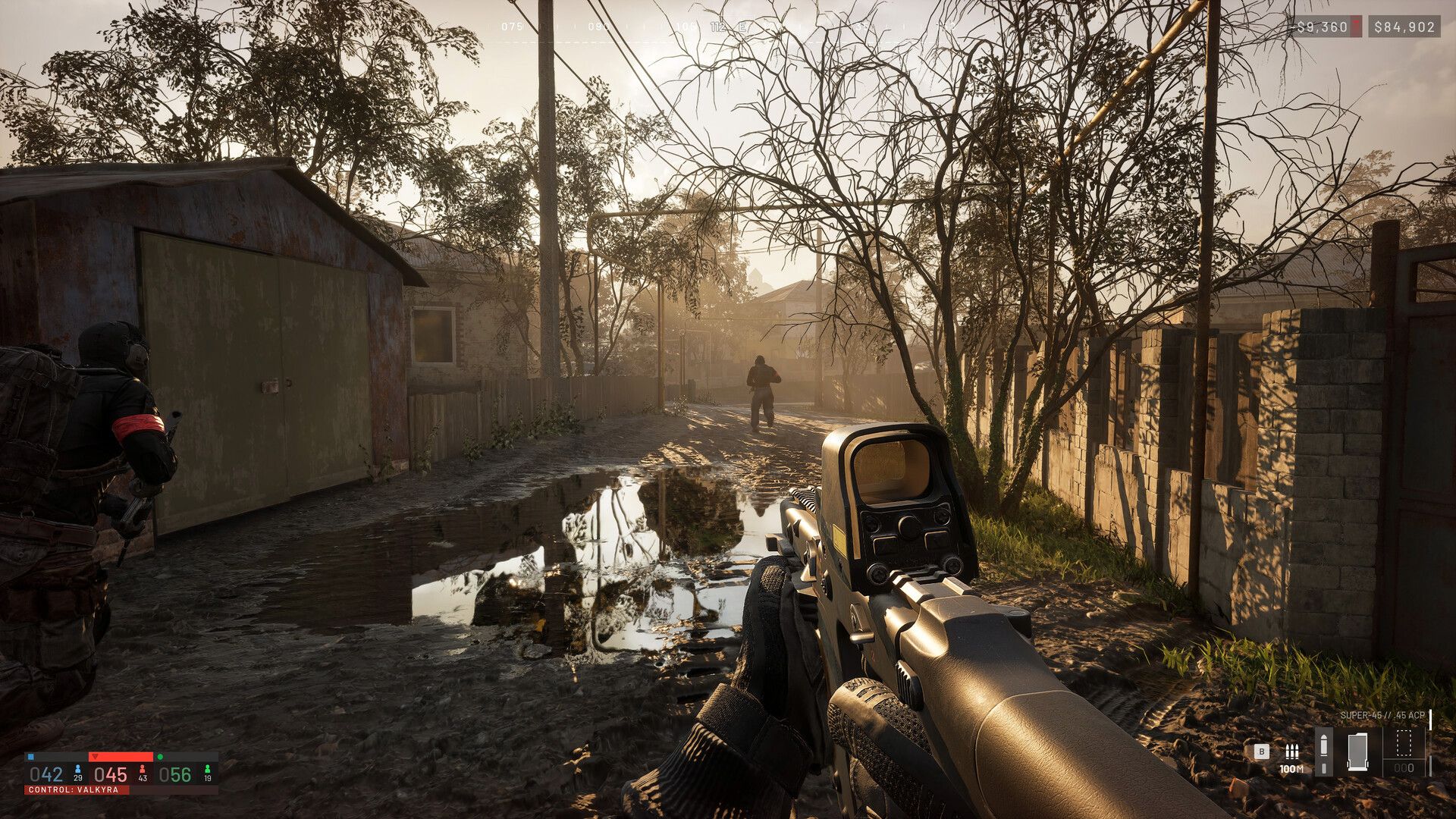
Steam shooter explodes in popularity after devs warn fans not to buy it
Wardogs, a tactical 100-player FPS that will soon launch on Steam's early access, is taking an unusual marketing approach aimed at PC gamers

Viral Hit 'Meccha Chameleon' Is Still Going Strong, Hitting 20 Million Sales
Meccha Chameleon just passed a huge milestone, clearing 20 million sales in just over 2 months.

Saber denies replacing Rideshare Stimulator’s writers with ChatGPT
After a former lead writer claimed Saber "replaced me with ChatGPT," CEO Matthew Karch now claims, "Neither Saber nor Unigine have replaced any writers with AI," for the Rideshare "Stimulator" game announced last month, developed by Unigine. The writer, Stella Sacco, says differently, however, posting on Bluesky that "I was lead writer on this one! &8230;

Halo: Campaign Evolved’s Biggest Competition Might Be Halo
Halo Campaign Evolved(https://www.gamespot.com/games/halo-campaign-evolved/) is a celebration of the franchise, but not many people are attending that party. New estimates peg sales at 1.2 million copies sold across PC, Xbox Series X|S, and PS5 so far, around $67 million in revenue, which isn't the best start for this remake of the original Halo campaign. Also available via Xbox Game Pass, the game is estimated to have 2.1 million players through the subscription service. According to Alinea Analytics' head of market analysis, Rhys Elliott(https://alineaanalytics.substack.com/), there are several reasons for this. Sales are split almost down the middle between Xbox Series X|S and PS5 at 42% and 41%, respectively, while Steam accounts for 17% of sales. This is up from its launch-week sales(https://www.gamespot.com/articles/halo-on-ps5-is-off-to-a-slow-start-expert-says/), but not by much. So what's the reason behind the lukewarm sales of the classic first-person shooter, which has gotten a new coat of paint and some fine-tuning under the gameplay hood? https://www.youtube.com/watch?v=7LimYD3Ycwo As Elliott noted, Halo: Campaign Evolved's biggest competition on PC might be another Halo--specifically, Halo: The Master Chief Collection. The Halo game compilation offers better value for money and includes Halo: Combat Evolved Anniversary, a 2015 remake that's pretty solid in its own right. Throw in options for multiplayer and more Halo games to the mix, and the $40 price tag makes it a much more tempting offer compared to the $50 required for Halo: Campaign Evolved, which is more barebones in comparison. Shinier graphics, extra co-op missions, and the ability to sprint in that game just aren't enough, it seems. "The price is too high for a port like this one, and the Halo brand--candidly--has lost a lot of cache, Elliot wrote(https://x.com/superhys/status/2087224210296893632). "A lot of Steam users already own Master Chief Collection--8.5 million copies sold on Steam, as per our estimates--which offers more content for less. On PS5, Halo: Campaign Evolved is estimated to have sold 544,000 copies so far, neck and neck with Xbox despite the Sony platform having a larger userbase than its Microsoft rival. Elliot explained that while plenty of PS5 owners jumped in thanks to the nostalgia factor of Halo, sales were driven by an "older, nostalgia-driven crowd" that encompasses players who are roughly 32-40 years old. Many of these people were likely former Xbox 360 owners who had since moved to PlayStation hardware, but the game didn't make a big dent with a "fresh" PlayStation audience. https://www.youtube.com/watch?v=woUnTCVv9JU Shooters, remakes, and legacy-leaning titles still sell well on the platform, as the audience overlap skews heavily toward the late PS2, Xbox 360, and early PS4 eras, Elliot explained. While Halo: Campaign Evolved didn't achieve the same velocity as several other Xbox ports did on PlayStation, bringing the Master Chief Collection with its multiplayer suite to that platform would have "certainly" done better, Elliot wrote. "At the very least, if the rumored Halo 2 remake ships with online multiplayer, it’ll sell a great deal more, assuming it comes to PlayStation at all." The co-creator of Halo and designer of Master Chief, Marcus Lehto, also shared his opinion on the remake recently, saying that he has a few issues(https://www.gamespot.com/articles/halo-co-creator-calls-out-remake-for-pandering-to-new-era-of-players-with-0-attention-span/) with it but is generally happy with how it came out. Following the final update for Halo: Infinite(https://www.gamespot.com/articles/halo-infinites-last-update-arrives-this-month-as-devs-move-to-other-halo-projects/1100-6536070/) in November 2025, Halo Studios has now begun work on new Halo projects.
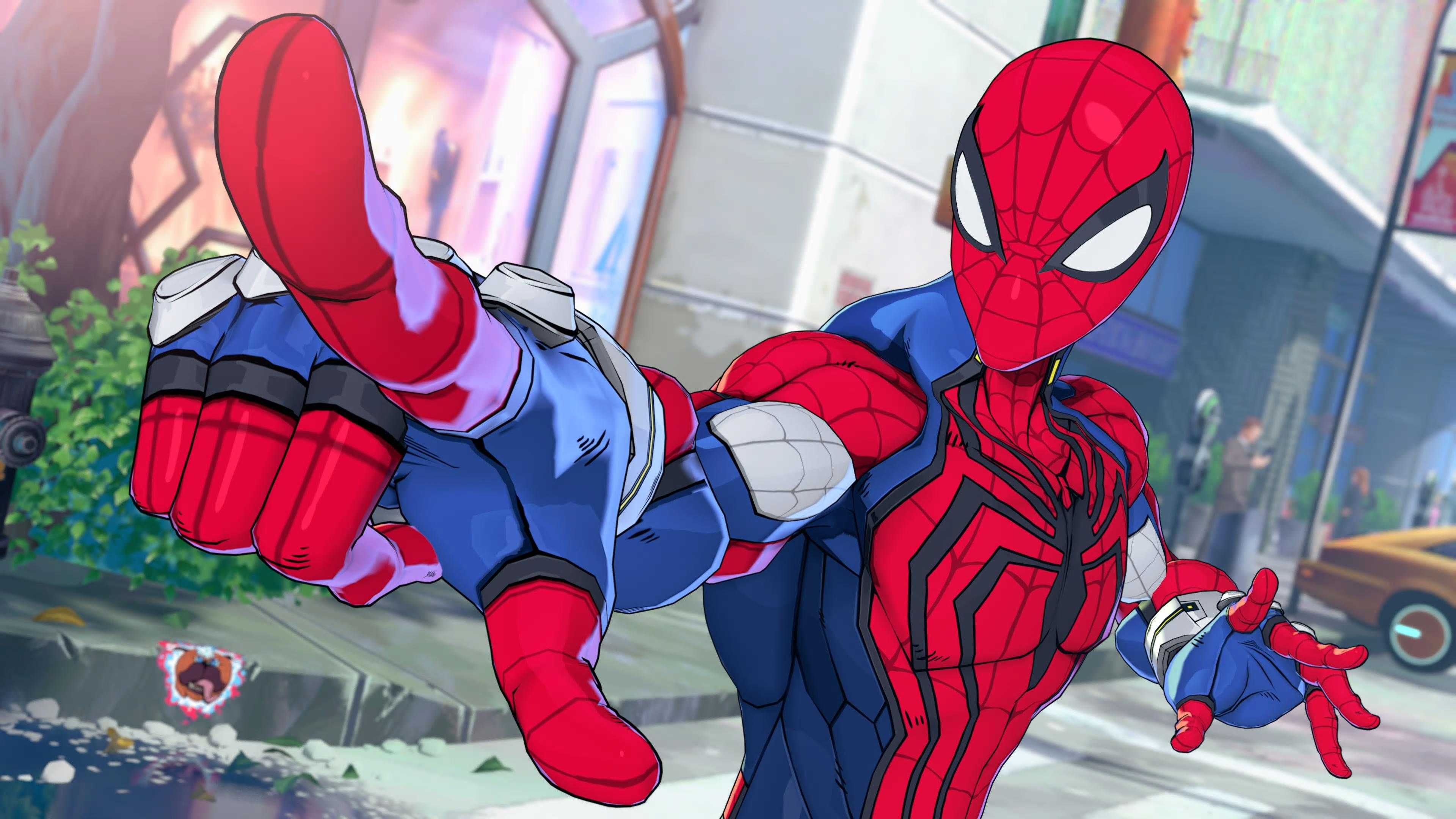
Marvel Tokon’s Anime Style Is Great, but Its Lack of Fashion Stinks
Marvel Tokon Fighting Souls has a wonderful anime art style. What it doesn't have is a variety of costumes for decades-old Marvel superheroes.
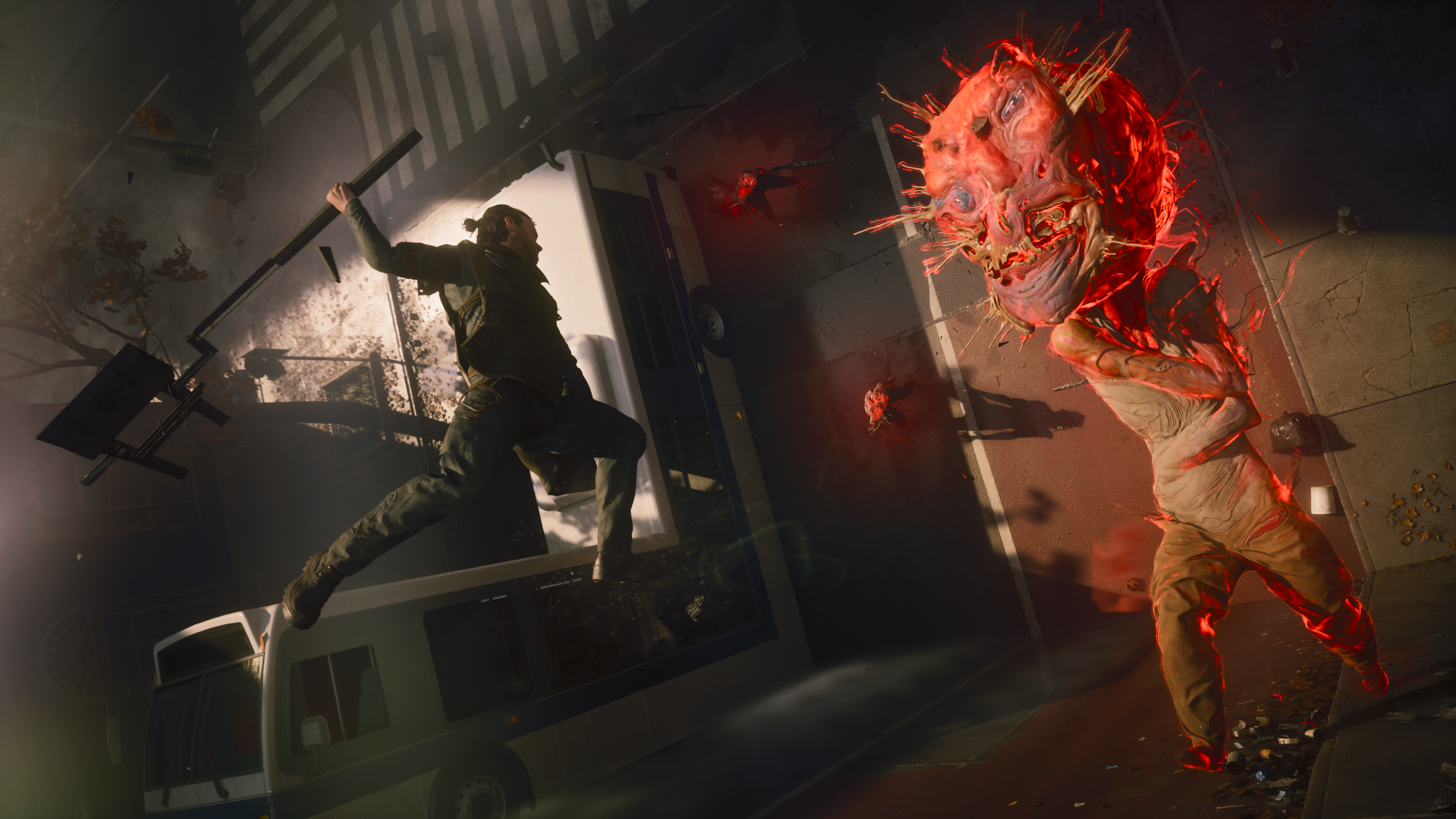
Fortnite Giving Away Free Skin Ahead of Control Resonant Launch
Epic Games is gifting a free Fortnite skin to players who used their platform to buy the game.
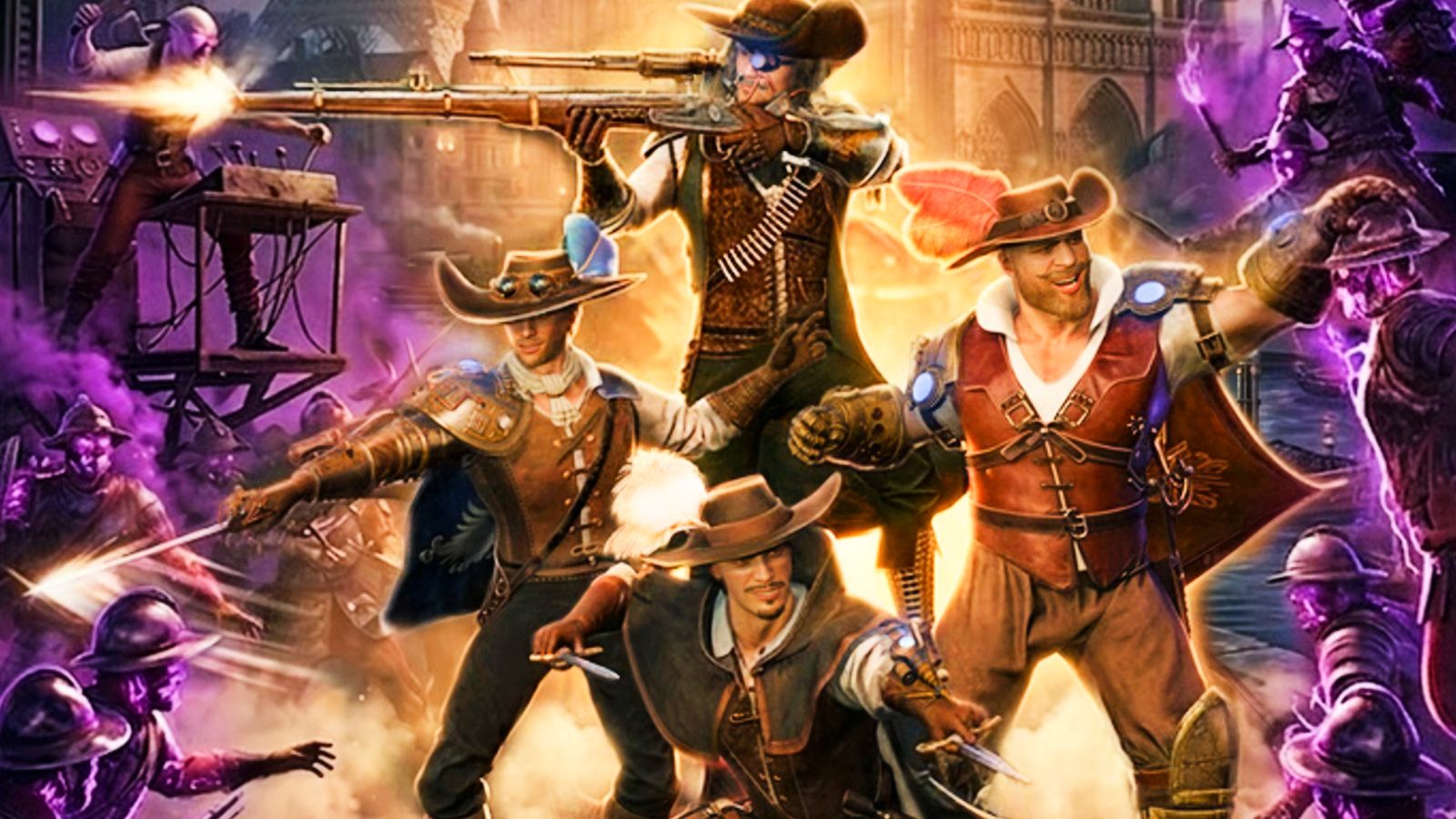
Upcoming RPG Promises Neverwinter Nights Vibes With a Steampunk Touch
Covenant of Gears: The Three Musketeers is an upcoming RPG with real-time combat with tactical pause and a full campaign editor.