The best Fire Emblem game launched 30 years ago, saving the series
🎮 Multi-platformNews
#Gaming#Fire Emblem: Genealogy Of The Holy War#Fire Emblem

The best Fire Emblem game launched 30 years ago, saving the series

Polygon RSS FeedJosh Broadwell5 min read(4 months ago)

Overview & Key Takeaways

Fire Emblem: Genealogy of the Holy War pioneered everything that makes modern Fire Emblem popular with Nintendo fans

If you've kept up with Fire Emblem over the past decade, you're probably familiar with the tale of its downfall and rebirth, or at least one version of it. Intelligent Systems and Nintendo decided North American consumers were finally capable of purchasing strategy games and published the seventh Fire Emblem game, The Blazing Blade, called simply Fire Emblem for international audiences in 2003. Thus began a roller coaster of successes and failures.

In 2012, as the series was on the brink of collapse, Fire Emblem Awakening launched with a cast of marriage candidates and countless permutations of their playable, genetically modified children as a last-ditch attempt to save the series. It worked! It was a miracle! Or a shameful concession to the popularity of games like Persona, depending on who's talking. It was neither, though. Intelligent Systems and Nintendo already paved the road to salvation 30 years previously with Fire Emblem: Genealogy of the Holy War.

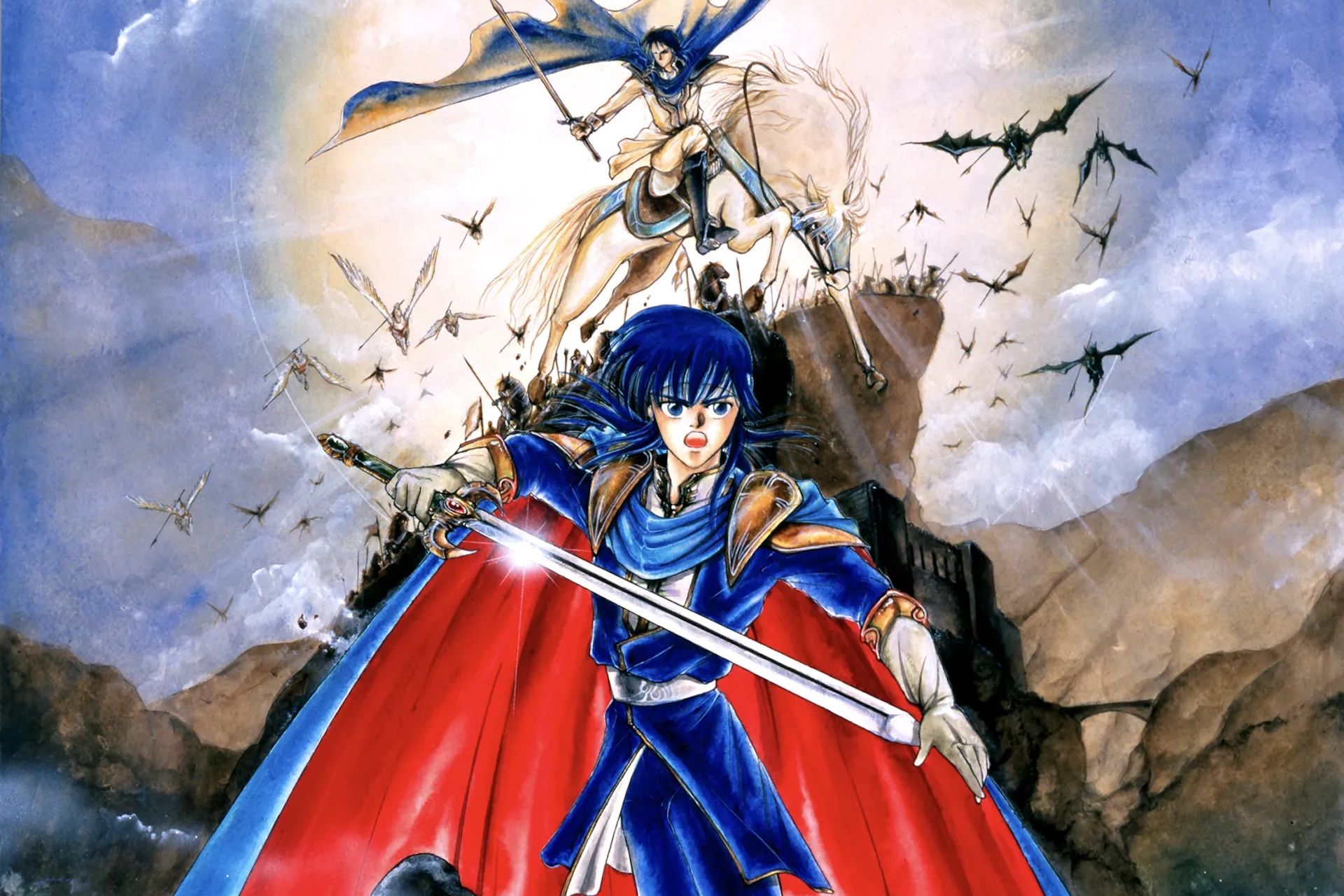
An early-game map from Fire Emblem: Genealogy of the Holy War Image: Intelligent Systems/Nintendo

The whole thing spans generations — hence the "Genealogy" part of the name — because everything is bigger in Genealogy. Everything. A single battlefield map contains what would be three chapters or so in any other Fire Emblem. You might start one mission by galloping off to save a castle besieged by bandits, only to end up dealing with reinforcements threatening the base you just left behind and a kidnapping victim to rescue in another castle further away. All these objectives are relevant to the story, as Genealogy spins its tale out among dozens of important personalities across multiple countries and even — a unique thing for the series — ally armies.

Genealogy of the Holy War, released in 1996 for Nintendo's Super Famicom and never officially localized outside Japan, features a lot of plot beats that will seem familiar if you've played any Fire Emblem game, including Awakening, but dials them up to 11. The gist of it is that a powerful country takes advantage of a smaller one during a time of weakness in a bid to expand their rule over the continent. You're (mainly, for the first half) Sigurd, a prince whose initial "defeat the bad guy" motivations get swallowed up in a complex tangle of politics and dark magic. Do-gooders get involved, there's backstabbing and surprise twists to do with deities and the descendants thereof, along with a very Awakening-coded bit about using humans as the vessels of gods. (Let’s also not forget some really weird bits where half-siblings kind of sort of get married. They didn't know they were related. Yes, you could say this is the Game of Thrones of Fire Emblem.)

For a long time, Fire Emblem did a thing with allies, the green characters who never know how to fight, where a bunch of them would appear and get murdered unless you saved them. You'd sometimes get a reward if you succeeded in preventing all of them from dying, but saving them for the purpose of getting nice things was really their only significance. Genealogy of the Holy War ropes them into the story. Allies may show up as they're fleeing another army or scouting the field wondering whether to help you, and the reinforcements they bring are usually essential to turning the tide — or a massive liability as you suddenly have to shift resources to protect them.

One of the game's most memorable moments happens at the end of the first act. Two important characters you previously played as are on the run from one of the game's many villains, and they turn up as "neutral" allies right as you're dealing with one of the other main villains. They appear at the far end of the map. With their children in tow, plus a bunch of knights and the hope that you'll rescue them from the massive amount of wyvern riders in pursuit. The whole thing is very dramatic and one of the best cases for cramming each map full of events and stories.

A battle scene from Fire Emblem: Genealogy of the Holy War Image: Intelligent Systems/Nintendo

It's also where Nintendo and Intelligent Systems safeguarded Fire Emblem's future, even if they weren't aware of it at the time. Genealogy of the Holy War's second act picks up with the children of the first act's heroes in a shift that Awakening owes much to. Like in Awakening, the children you get depend on which relationships you fostered during the first half, though (also like Awakening) the game also gives you a roster of standard kids if you ignored support pairings, so you can still enjoy and finish the game. Their parents failed miserably and died in the knowledge that they left behind a broken world, and now it's up to them to put things right, which they do in spectacular fashion.

Games that put you through the wringer and still let all the bad things happen, before giving you a chance to fix them, are hardly rare anymore. Just look at Dragon Quest 11. But it was a big deal when Genealogy of the Holy War first launched (reviews at the time praised its story above all else), and it's why people still hold the game in such high regard today. So it's no surprise — or cynical concession to the masses — that Nintendo trotted that concept out again in its last desperate effort to save the series. Of course it did, and, of course, it worked. This was Fire Emblem at its finest.
An image from Fire Emblem Path of Radiance, featuring Ike, a blue-haired protagonist with muscles and a huge sword. Related

It's always a good time to play Fire Emblem
Share:

More in Multi-platform

Magic: The Gathering Isn’t Done With Final Fantasy Just Yet🎮 Multi-platform

Magic: The Gathering Isn’t Done With Final Fantasy Just Yet

Final Fantasy 7 Revelation includes an exclusive Magic: The Gathering promo card, continuing Wizards’ steady stream of Final Fantasy releases.

🎮 Final Fantasy🎮 Magic: The Gathering
PolygonNewsabout 3 hours ago
‘Worst Crash We’ve Seen Since the 1980s,’ Warns Epic Games CEO🖥 PC, Multi-platform

‘Worst Crash We’ve Seen Since the 1980s,’ Warns Epic Games CEO

A panel of experts said the game industry is currently in the worse state it's been in 40 years.

🎮 Fortnite
PolygonNewsabout 4 hours ago
Playing Halloween: The Game's Single-Player Campaign Is A Tutorialized Love Letter, But Not What You're Here For🎮 Multi-platform

Playing Halloween: The Game's Single-Player Campaign Is A Tutorialized Love Letter, But Not What You're Here For

!Halloween The Game Michael Myers Illfonic Gun Interactive Single Player Campaign (https://gameinformer.com/sites/default/files/styles/bodydefault/public/2026/09/03/af83b5ce/halloweenpromo1.jpg.webp) Colorado-based developer IllFonic has been making asymmetrical multiplayer games based on iconic movie IPs for most of its existence. Arguably its biggest hit remains its first stab at the genre, with 2017's Friday the 13th: The Game (a great game now infamous for its shutdown), but since then, the team has released Predator: Hunting Grounds, Ghostbusters: Spirits Unleashed, and most recently, Killer Klowns from Outer Space: The Game. Finally, though, IllFonic is making the biggest horror-movie-turned-asymmetrical-multiplayer layup game of all time with Halloween: The Game. If you preorder the more expensive fancy-smancy version, you can hop into the game early on September 4; otherwise, the game goes wide on September 8. I need more time to work through and digest IllFonic's multiplayer offering in Halloween, but I have completed the single-player campaign (the studio's first in one of these games) and wanted to bring you some initial thoughts. A Few Notches Above Glorified Tutorial !Game Informer News(https://gameinformer.com/sites/default/files/styles/bodydefault/public/2026/09/03/2e83139b/halloween1.jpg.webp) If you aren't a multiplayer person and were curious about picking up Halloween for its single-player offering... I wouldn't. It lasts just a couple of hours – though you can extend it by replaying chapters to knock out optional objectives and unlock cosmetic rewards – and is just a few notches above a glorified tutorial for playing as Michael Myers. Each chapter introduces new mechanics in his kit that you will then hone and master in the multiplayer side of Halloween. There is a heaping dose of love from IllFonic, however, to the movies, primarily the 1978 Halloween from director/synth player/gamer John Carpenter that started it all, that elevates it just so. As you might expect, a single-player campaign where you play as Michael Myers based on the first Halloween film is, well, a video game version of that movie. If you've never played an IllFonice game before, this campaign will give you the rundown on how its games feel, including the at-this-point-must-be-a-feature-and-not-a-bug baked-in instability. I encountered nothing game-ruining, but like its predecessors, Halloween has a distinguishable jank to it that you will either come to love because it adds to the unpredictable nature of these multiplayer experiences or you will hate because... it's still jank. It runs fine, performance-wise, but I did encounter some noticeable bugs, like falling through floors or being unable to hide bodies in designated hiding areas; I would not categorize this as the acceptable jank I expect in an IllFonic game, and I hope the team is working on patching issues like that up. !Game Informer News(https://gameinformer.com/sites/default/files/styles/bodydefault/public/2026/09/03/bd2832aa/halloweenpromo3.jpg.webp) Nonetheless, escaping Smith's Grove, killing a mechanic and donning Michael's trademark navy blue jumpsuit, and killing the clerk at a department store so you can steal and put on the William Shatner mask to complete the set is good fun. A filmic look overlaid on the game's true-to-movie visual style sells the aesthetics. Though if you aren't a fan of film grain, you won't like what you see. Performances in the campaign are fine, with Dr. Loomis being the only real standout/named character in the otherwise boilerplate cast who are there to be victims. Running around Haddonfield's suburbs as Michael is good, terrifying fun. In quiet moments, his pained breaths add a sinister air to every step, while screams from nearby houses or hushed breathing in closets sell the idea that you embody evil and everyone is afraid of you. So, too, does the wide array of kills at your disposal. You can stalk victims from afar, completing minigames to raise what is essentially their fear level, and then strike using your knife, your hands, other weapons you find out and about like pitchforks and fire pokers, or even the environment for special contextual kills (like piercing bodies onto telephone poles or throwing someone off a second-floor porch). It remains a good time throughout the short campaign, which ends with Michael escaping Haddonfield to presumably go kill a bunch of random players in online matchmaking lobbies, but it does little more than teach you the ropes within the context of some of Michael's most notorious kills. !Game Informer News(https://gameinformer.com/sites/default/files/styles/bodydefault/public/2026/09/03/05b7c47e/halloween2.jpg.webp) I'm satisfied as this campaign is about what I expected, but I would have liked something bigger to dig my knife into for IllFonic's first go at a single-player experience like this. Admittedly, however, that's not what you're here for (or at least, not what you should be here for). IllFonic's games of this ilk live and die by the multiplayer, and though I can see how playing as Michael will be interesting, I still have no idea what it's like to play alongside real players or as a resident running from him. With the campaign behind me, I'll be starting my multiplayer Halloween journey properly. Look forward to my review for Game Informerat a later date. In the meantime, read Game Informer's reviews for Friday the 13th: The Game(https://gameinformer.com/games/fridaythe13ththegame/b/playstation4/archive/2017/06/02/a-killer-formula-suffering-massive-casualties.aspx), Predator: Hunting Grounds(https://gameinformer.com/review/predator-hunting-grounds/not-quite-at-its-apex), and Killer Klowns from Outer Space: The Game(https://gameinformer.com/review/killer-klowns-from-outer-space-the-game/more-fun-than-a-pie-in-the-face). After that, read our interview with IllFonic about what to expect in Halloween(https://gameinformer.com/gamescom-2025/2025/08/25/everything-we-learned-about-single-player-and-multiplayer-in-illfonics).

🎮 Playing Halloween: The Game's Single-Player Campaign
GameNewsabout 4 hours ago