Pamela Anderson's comic-book movie Barb Wire ages terribly in every way, except one
🎮 Multi-platformNews
🎮 Spider-Man#Movies#Barb Wire

Pamela Anderson's comic-book movie Barb Wire ages terribly in every way, except one

Polygon RSS FeedBrian VanHooker4 min read(4 months ago)

Overview & Key Takeaways

Barb Wire, released in 1996, was a failed comic book adaptation that has aged poorly in every way except for one

Blade did it first.”

That’s the refrain you’ll hear from any Blade fan whenever somebody mentions that the current, although now waning, trend of comic book movie blockbusters began with 2000’s X-Men and 2002’s Spider-Man. And yes, it’s true that Blade was a successful comic book adaptation, pulling in $131 million at the box office. But compared to X-Men’s nearly $300 million haul, and Spider-Man’s more than $800 million success, Blade isn’t quite in the same category.

Of course, the “Blade did it first” argument also ignores that there’d been plenty of successful Batman and Superman films before that, and there were a variety of other, smaller comic book adaptations including The Mask, Men in Black and 1996’s Barb Wire, a movie that has aged pretty badly in every single way, save one.

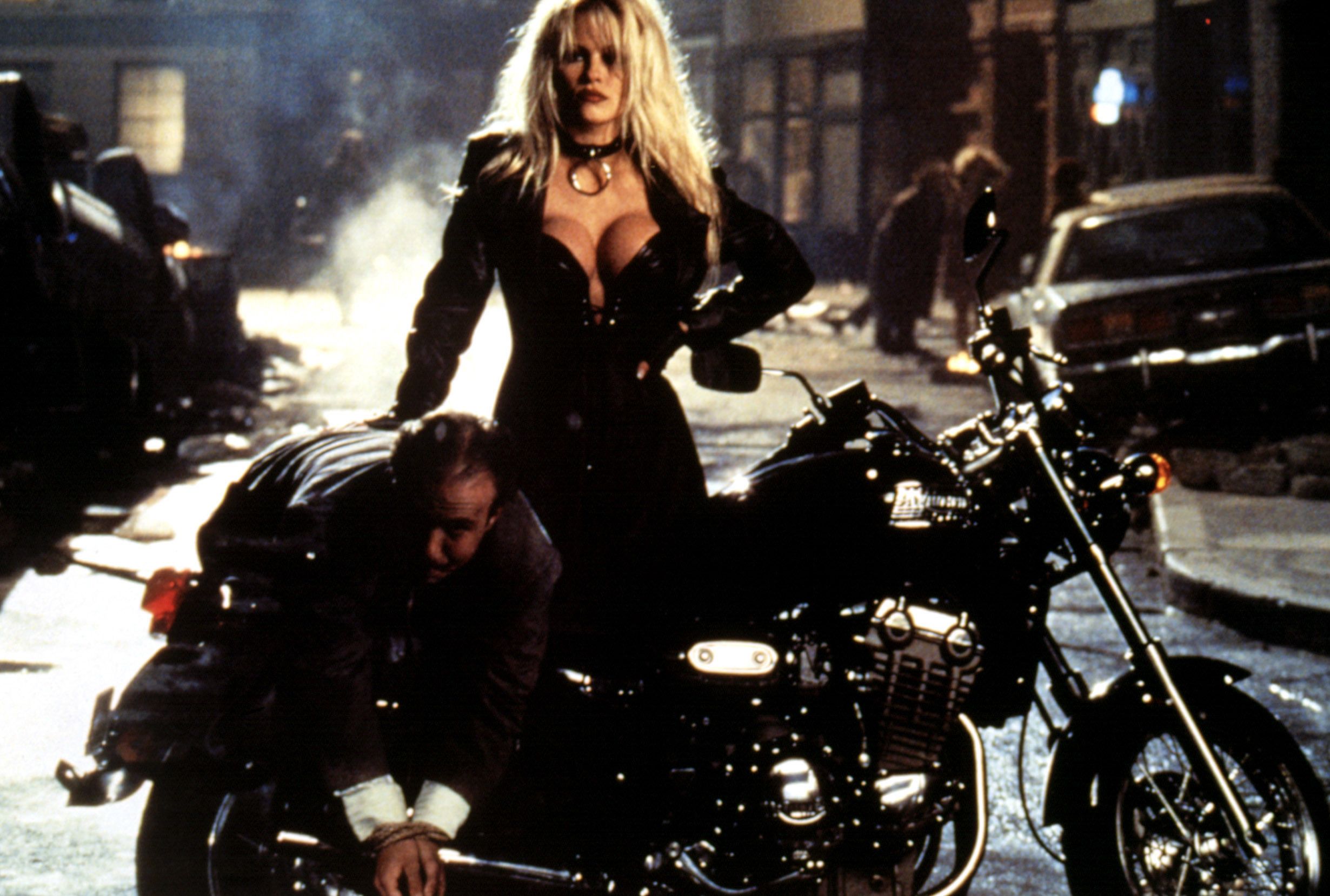
Barb Wire was released three decades ago on May 3, 1996. It was directed by David Hogan, who is mostly known for directing music videos and was the second unit director of Alien 3 and Batman Forever. It was written by Chuck Pfarrer (Darkman) and Ilene Chaiken (The L Word). And of course, it stars Pamela Anderson as the titular character, a leather-wearing, perpetually cleavage-exposing bounty hunter who owns a bar named the Hammerhead.

Barb Wire began as a character from Dark Horse Comics debuting in 1993. She lives in an alternate timeline where aliens landed and began experimenting on people in 1931, then a nuclear accident in 1947 merged with the alien tech, which gave lots of people superpowers. Fast forwarding to the 1990s, bounty hunter/vigilante Barb Wire operates the Hammerhead in a city called Steel Harbor while America is in the throes of its second civil war.

The film adaptation nixed all the alien and superpowers stuff. It also set its story not in an alternate timeline, but in a dystopian future of 2017, where America's second civil war is raging and Steel Harbor is the “last free city.” Barb is now an ex-freedom fighter who, despite her proclaimed, self-interested neutrality, eventually ends up aiding the resistance against America’s now-facist government.

Barb Wire Issue #1 Image: Dark Horse Comics

Really though, Barb Wire — with its bad acting, quippy-yet-unfunny dialogue, and thin plotting that borrows very heavily from Casablanca — reads as little more than a veiled excuse to show off Anderson’s physique.

While it was a success in that regard, it was a failure in every other way. Barb Wire bombed at the box office, failing to even match its $9 million budget. From a 2026 perspective, it also reads as a failure, being nothing more than a cheesy ‘90s sexploitation film. And while it stars a female badass, it still manages to be terribly sexist for how all the male characters regard Barb as a sex object and how the dialogue almost always invites their objectification. (Except when they call her “Babe,” she hates that.)

The military officers in Barb Wire Image: Gramercy Pictures

Yet one thing about the movie seems to take on a bit of extra meaning in 2026. The America in the film is literally in its second civil war and the American military officers in the movie are depicted in uniforms that unmistakably resemble Nazi uniforms. These fascist officers raid businesses (like the Hammerhead) and round up anyone seen as part of the resistance. Meanwhile, Canada is depicted as America’s sane, stable neighbor. Members of the resistance flee north for safety, and Canadian money is regarded as more stable than American dollars.

In 1996, such an America seemed utterly absurd and the movie was not at all a reflection of where the country was or seemed to be going. The civil war element came straight from the comics and the Nazi elements (which weren’t in the comics) were likely just another thing to borrow from Casablanca. Also, Americans moving to Canada, or even just having a desire to do so, was not nearly as commonplace as it is today. But in 2026, America’s divisiveness has reached a multi-generational high and facism seems to be in vogue with a good chunk of the American electorate, which makes the dystopian future depicted in Barb Wire seem like a much more possible future for America.

Share:

More in Multi-platform

Magic: The Gathering Isn’t Done With Final Fantasy Just Yet🎮 Multi-platform

Magic: The Gathering Isn’t Done With Final Fantasy Just Yet

Final Fantasy 7 Revelation includes an exclusive Magic: The Gathering promo card, continuing Wizards’ steady stream of Final Fantasy releases.

🎮 Final Fantasy🎮 Magic: The Gathering
PolygonNewsabout 4 hours ago
‘Worst Crash We’ve Seen Since the 1980s,’ Warns Epic Games CEO🖥 PC, Multi-platform

‘Worst Crash We’ve Seen Since the 1980s,’ Warns Epic Games CEO

A panel of experts said the game industry is currently in the worse state it's been in 40 years.

🎮 Fortnite
PolygonNewsabout 4 hours ago
Playing Halloween: The Game's Single-Player Campaign Is A Tutorialized Love Letter, But Not What You're Here For🎮 Multi-platform

Playing Halloween: The Game's Single-Player Campaign Is A Tutorialized Love Letter, But Not What You're Here For

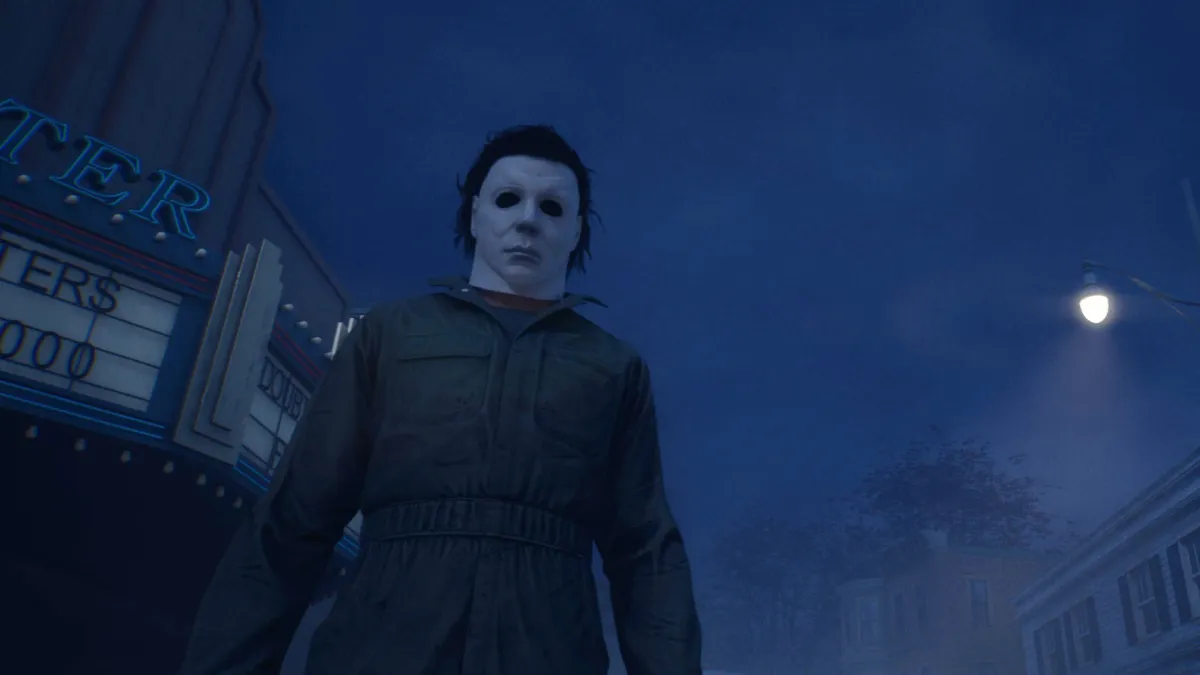
!Halloween The Game Michael Myers Illfonic Gun Interactive Single Player Campaign (https://gameinformer.com/sites/default/files/styles/bodydefault/public/2026/09/03/af83b5ce/halloweenpromo1.jpg.webp) Colorado-based developer IllFonic has been making asymmetrical multiplayer games based on iconic movie IPs for most of its existence. Arguably its biggest hit remains its first stab at the genre, with 2017's Friday the 13th: The Game (a great game now infamous for its shutdown), but since then, the team has released Predator: Hunting Grounds, Ghostbusters: Spirits Unleashed, and most recently, Killer Klowns from Outer Space: The Game. Finally, though, IllFonic is making the biggest horror-movie-turned-asymmetrical-multiplayer layup game of all time with Halloween: The Game. If you preorder the more expensive fancy-smancy version, you can hop into the game early on September 4; otherwise, the game goes wide on September 8. I need more time to work through and digest IllFonic's multiplayer offering in Halloween, but I have completed the single-player campaign (the studio's first in one of these games) and wanted to bring you some initial thoughts. A Few Notches Above Glorified Tutorial !Game Informer News(https://gameinformer.com/sites/default/files/styles/bodydefault/public/2026/09/03/2e83139b/halloween1.jpg.webp) If you aren't a multiplayer person and were curious about picking up Halloween for its single-player offering... I wouldn't. It lasts just a couple of hours – though you can extend it by replaying chapters to knock out optional objectives and unlock cosmetic rewards – and is just a few notches above a glorified tutorial for playing as Michael Myers. Each chapter introduces new mechanics in his kit that you will then hone and master in the multiplayer side of Halloween. There is a heaping dose of love from IllFonic, however, to the movies, primarily the 1978 Halloween from director/synth player/gamer John Carpenter that started it all, that elevates it just so. As you might expect, a single-player campaign where you play as Michael Myers based on the first Halloween film is, well, a video game version of that movie. If you've never played an IllFonice game before, this campaign will give you the rundown on how its games feel, including the at-this-point-must-be-a-feature-and-not-a-bug baked-in instability. I encountered nothing game-ruining, but like its predecessors, Halloween has a distinguishable jank to it that you will either come to love because it adds to the unpredictable nature of these multiplayer experiences or you will hate because... it's still jank. It runs fine, performance-wise, but I did encounter some noticeable bugs, like falling through floors or being unable to hide bodies in designated hiding areas; I would not categorize this as the acceptable jank I expect in an IllFonic game, and I hope the team is working on patching issues like that up. !Game Informer News(https://gameinformer.com/sites/default/files/styles/bodydefault/public/2026/09/03/bd2832aa/halloweenpromo3.jpg.webp) Nonetheless, escaping Smith's Grove, killing a mechanic and donning Michael's trademark navy blue jumpsuit, and killing the clerk at a department store so you can steal and put on the William Shatner mask to complete the set is good fun. A filmic look overlaid on the game's true-to-movie visual style sells the aesthetics. Though if you aren't a fan of film grain, you won't like what you see. Performances in the campaign are fine, with Dr. Loomis being the only real standout/named character in the otherwise boilerplate cast who are there to be victims. Running around Haddonfield's suburbs as Michael is good, terrifying fun. In quiet moments, his pained breaths add a sinister air to every step, while screams from nearby houses or hushed breathing in closets sell the idea that you embody evil and everyone is afraid of you. So, too, does the wide array of kills at your disposal. You can stalk victims from afar, completing minigames to raise what is essentially their fear level, and then strike using your knife, your hands, other weapons you find out and about like pitchforks and fire pokers, or even the environment for special contextual kills (like piercing bodies onto telephone poles or throwing someone off a second-floor porch). It remains a good time throughout the short campaign, which ends with Michael escaping Haddonfield to presumably go kill a bunch of random players in online matchmaking lobbies, but it does little more than teach you the ropes within the context of some of Michael's most notorious kills. !Game Informer News(https://gameinformer.com/sites/default/files/styles/bodydefault/public/2026/09/03/05b7c47e/halloween2.jpg.webp) I'm satisfied as this campaign is about what I expected, but I would have liked something bigger to dig my knife into for IllFonic's first go at a single-player experience like this. Admittedly, however, that's not what you're here for (or at least, not what you should be here for). IllFonic's games of this ilk live and die by the multiplayer, and though I can see how playing as Michael will be interesting, I still have no idea what it's like to play alongside real players or as a resident running from him. With the campaign behind me, I'll be starting my multiplayer Halloween journey properly. Look forward to my review for Game Informerat a later date. In the meantime, read Game Informer's reviews for Friday the 13th: The Game(https://gameinformer.com/games/fridaythe13ththegame/b/playstation4/archive/2017/06/02/a-killer-formula-suffering-massive-casualties.aspx), Predator: Hunting Grounds(https://gameinformer.com/review/predator-hunting-grounds/not-quite-at-its-apex), and Killer Klowns from Outer Space: The Game(https://gameinformer.com/review/killer-klowns-from-outer-space-the-game/more-fun-than-a-pie-in-the-face). After that, read our interview with IllFonic about what to expect in Halloween(https://gameinformer.com/gamescom-2025/2025/08/25/everything-we-learned-about-single-player-and-multiplayer-in-illfonics).

🎮 Playing Halloween: The Game's Single-Player Campaign
GameNewsabout 4 hours ago