Sonny Boy is secretly the most bingeable anime of the decade
🎮 Multi-platformNews
🎮 Sonny Boy#What to Watch

Sonny Boy is secretly the most bingeable anime of the decade

Polygon RSS FeedRyan Epps4 min read(4 months ago)

Overview & Key Takeaways

Streaming on Hulu and DIsney Plus, Sonny Boy is the perfect length for a weekend binge

Some of the best anime out there require a huge time commitment. One Piece boasts 1,159, with no signs of slowing down. There are currently 47 episodes of Jujutsu Kaisen (plus a movie) with more on the way. Even Death Note with its tidy, one-season story is 37-episodes long. But there's one incredible anime show that you can easily watch in a single weekend, and it just so happens to be streaming on Hulu and Disney Plus.

Sonny Boy is the greatest anime I’ve ever seen. Directed by Shingo Natsume (One-Punch Man) and produced by legendary anime studio Madhouse, the 12-episode original TV series is an unforgettable exploration of adolescence, wrapping a surreal mystery into a narrative that refuses to play by the rules. It’s one of the most beautiful, impactful, and bingeable anime you’ll ever see — so much so you may watch it again and again just to feel something.

Sonny Boy follows a group of middle schoolers stranded in an alternate dimension where some begin to develop strange, unexplained powers. Think Lord of the Flies without the brutality. Through its story, Shingo Natsume explores themes like loneliness, identity, social pressure, and freedom, among many others. It’s not a happy story, nor a sad one; it exists somewhere in the middle.

Much of the story revolves around the quiet and reserved Nagara, whose detachment tends to leave him at odds with the rest of the group. He's the clearest window into what Sonny Boy actually is: a sci-fi isekai that focuses more on the human drama than the “why” of its world.

That’s exactly what makes Sonny Boy so bingeable. Its storytelling is intentionally unnatural, often skipping past major events to focus on the emotional fallout instead. Key details are left unresolved, including the nature of the world itself, which at first appears like their school but eventually changes on a whim. The show rarely ever explains why certain oddities are happening, turning intrigue into momentum. Watching Sonny Boy, you find yourself stuck in a compulsion loop of trying to understand every shift in logic with each new episode. (If that sounds a bit like Lost, well, you're not wrong, but unlike that divisive sci-fi show, Sonny Boy offers a satisfying ending.)

Shot from Sony Boy featuring chracters watching an odd sunset Image: Crunchyroll/Madhouse

Sonny Boy builds upon itself slowly and deliberately. The animation quality heightens the story, all while reinforcing its themes. Across just 12 episodes, the narrative stretches into something that feels like a lifetime, largely aided by its surreal visuals. In creating Sonny Boy, Natsume and Madhouse (the same studio behind Frieren: Beyond Journey’s End, Paprika, and Vampire Hunter D: Bloodlust) leaned into an experimental style defined by subtraction rather than excess.

For Natsume, that meant avoiding the high frame count and sakuga-heavy action sequences of anime like Jujutsu Kaisen or Demon Slayer. Instead, he prioritized simplicity to emphasize the show’s raw, thematic depth. Sonny Boy thrives in stillness. Its quiet, often empty moments carry as much weight as any action sequence ever could — sometimes even more.

With Shinichiro Watanabe (the director of Cowboy Bebop and Samurai Champloo) serving as a musical advisor on the show, it comes as no surprise the soundtrack is as uplifting to the story as it is utter ear candy. The show’s main theme, Sonny Boy Rhapsody by toe, stands out as the defining track and remains the most significant musical moment in the anime. The swirling math rock composition perfectly captures the show’s otherworldly tone with its surreal, spacey sound that feels pulled from another dimension.
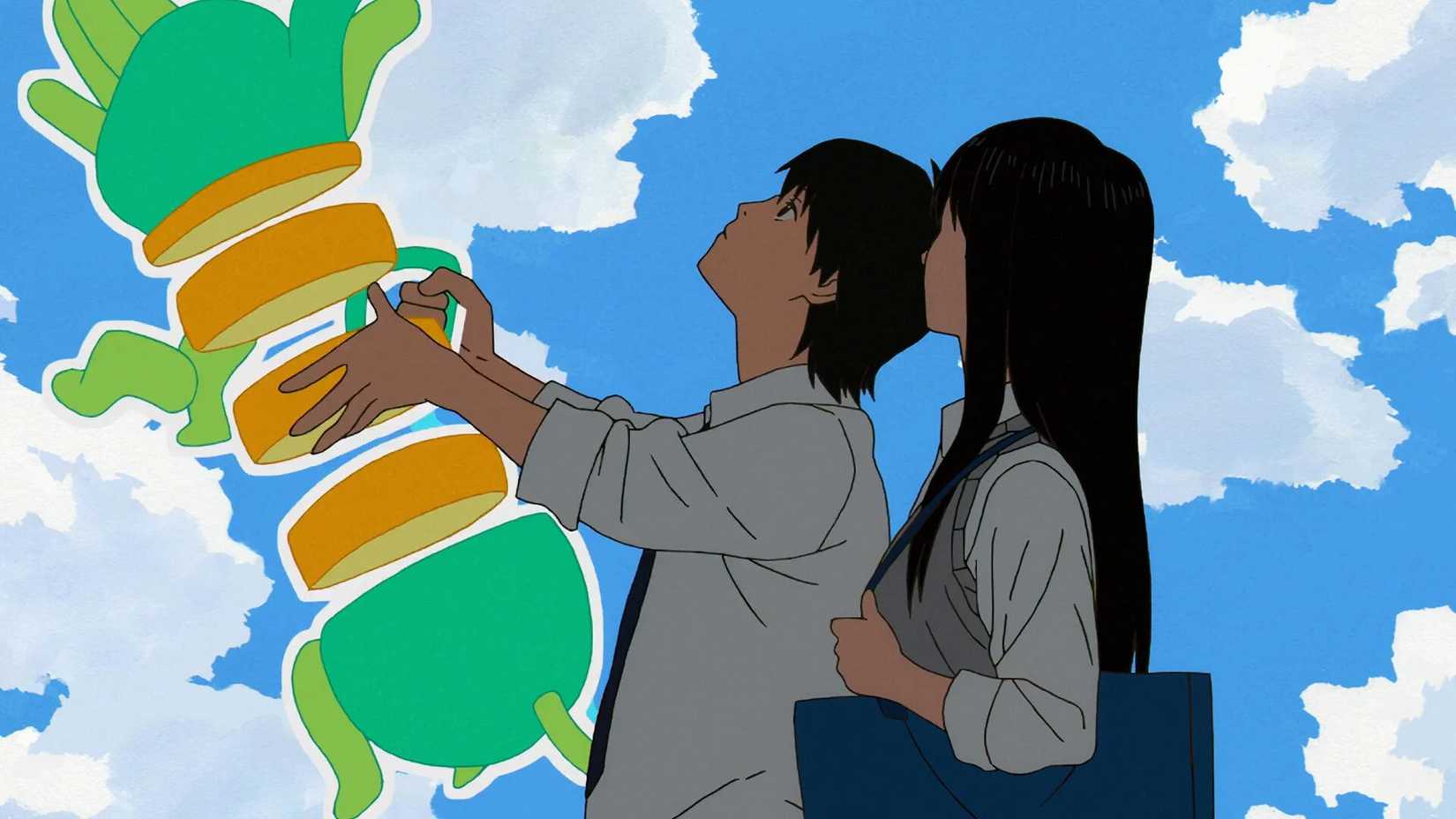
(L-R) Nagara and Koyama Mizuho in Sonny Boy. Image: Madhouse/Crunchyroll

Every element of Sonny Boy works toward the same effect: pulling you deeper into its world. Beneath the surrealism is a grounded narrative about growing up and the inevitability of life. But dive deeper, and you’ll find a smorgasbord of philosophical meaning on disappointment, moving on, the quiet loss of innocence, and so much more.

It’s a story that resists easy answers, and that’s exactly why it lingers. Long after the credits roll, Sonny Boy keeps reeling you in — not because you understand it, but because you don’t. And sooner or later, that pull turns into something harder to ignore: the need to start it all over again.


Share:

More in Multi-platform

Magic: The Gathering Isn’t Done With Final Fantasy Just Yet🎮 Multi-platform

Magic: The Gathering Isn’t Done With Final Fantasy Just Yet

Final Fantasy 7 Revelation includes an exclusive Magic: The Gathering promo card, continuing Wizards’ steady stream of Final Fantasy releases.

🎮 Final Fantasy🎮 Magic: The Gathering
PolygonNewsabout 4 hours ago
‘Worst Crash We’ve Seen Since the 1980s,’ Warns Epic Games CEO🖥 PC, Multi-platform

‘Worst Crash We’ve Seen Since the 1980s,’ Warns Epic Games CEO

A panel of experts said the game industry is currently in the worse state it's been in 40 years.

🎮 Fortnite
PolygonNewsabout 4 hours ago
Playing Halloween: The Game's Single-Player Campaign Is A Tutorialized Love Letter, But Not What You're Here For🎮 Multi-platform

Playing Halloween: The Game's Single-Player Campaign Is A Tutorialized Love Letter, But Not What You're Here For

!Halloween The Game Michael Myers Illfonic Gun Interactive Single Player Campaign (https://gameinformer.com/sites/default/files/styles/bodydefault/public/2026/09/03/af83b5ce/halloweenpromo1.jpg.webp) Colorado-based developer IllFonic has been making asymmetrical multiplayer games based on iconic movie IPs for most of its existence. Arguably its biggest hit remains its first stab at the genre, with 2017's Friday the 13th: The Game (a great game now infamous for its shutdown), but since then, the team has released Predator: Hunting Grounds, Ghostbusters: Spirits Unleashed, and most recently, Killer Klowns from Outer Space: The Game. Finally, though, IllFonic is making the biggest horror-movie-turned-asymmetrical-multiplayer layup game of all time with Halloween: The Game. If you preorder the more expensive fancy-smancy version, you can hop into the game early on September 4; otherwise, the game goes wide on September 8. I need more time to work through and digest IllFonic's multiplayer offering in Halloween, but I have completed the single-player campaign (the studio's first in one of these games) and wanted to bring you some initial thoughts. A Few Notches Above Glorified Tutorial !Game Informer News(https://gameinformer.com/sites/default/files/styles/bodydefault/public/2026/09/03/2e83139b/halloween1.jpg.webp) If you aren't a multiplayer person and were curious about picking up Halloween for its single-player offering... I wouldn't. It lasts just a couple of hours – though you can extend it by replaying chapters to knock out optional objectives and unlock cosmetic rewards – and is just a few notches above a glorified tutorial for playing as Michael Myers. Each chapter introduces new mechanics in his kit that you will then hone and master in the multiplayer side of Halloween. There is a heaping dose of love from IllFonic, however, to the movies, primarily the 1978 Halloween from director/synth player/gamer John Carpenter that started it all, that elevates it just so. As you might expect, a single-player campaign where you play as Michael Myers based on the first Halloween film is, well, a video game version of that movie. If you've never played an IllFonice game before, this campaign will give you the rundown on how its games feel, including the at-this-point-must-be-a-feature-and-not-a-bug baked-in instability. I encountered nothing game-ruining, but like its predecessors, Halloween has a distinguishable jank to it that you will either come to love because it adds to the unpredictable nature of these multiplayer experiences or you will hate because... it's still jank. It runs fine, performance-wise, but I did encounter some noticeable bugs, like falling through floors or being unable to hide bodies in designated hiding areas; I would not categorize this as the acceptable jank I expect in an IllFonic game, and I hope the team is working on patching issues like that up. !Game Informer News(https://gameinformer.com/sites/default/files/styles/bodydefault/public/2026/09/03/bd2832aa/halloweenpromo3.jpg.webp) Nonetheless, escaping Smith's Grove, killing a mechanic and donning Michael's trademark navy blue jumpsuit, and killing the clerk at a department store so you can steal and put on the William Shatner mask to complete the set is good fun. A filmic look overlaid on the game's true-to-movie visual style sells the aesthetics. Though if you aren't a fan of film grain, you won't like what you see. Performances in the campaign are fine, with Dr. Loomis being the only real standout/named character in the otherwise boilerplate cast who are there to be victims. Running around Haddonfield's suburbs as Michael is good, terrifying fun. In quiet moments, his pained breaths add a sinister air to every step, while screams from nearby houses or hushed breathing in closets sell the idea that you embody evil and everyone is afraid of you. So, too, does the wide array of kills at your disposal. You can stalk victims from afar, completing minigames to raise what is essentially their fear level, and then strike using your knife, your hands, other weapons you find out and about like pitchforks and fire pokers, or even the environment for special contextual kills (like piercing bodies onto telephone poles or throwing someone off a second-floor porch). It remains a good time throughout the short campaign, which ends with Michael escaping Haddonfield to presumably go kill a bunch of random players in online matchmaking lobbies, but it does little more than teach you the ropes within the context of some of Michael's most notorious kills. !Game Informer News(https://gameinformer.com/sites/default/files/styles/bodydefault/public/2026/09/03/05b7c47e/halloween2.jpg.webp) I'm satisfied as this campaign is about what I expected, but I would have liked something bigger to dig my knife into for IllFonic's first go at a single-player experience like this. Admittedly, however, that's not what you're here for (or at least, not what you should be here for). IllFonic's games of this ilk live and die by the multiplayer, and though I can see how playing as Michael will be interesting, I still have no idea what it's like to play alongside real players or as a resident running from him. With the campaign behind me, I'll be starting my multiplayer Halloween journey properly. Look forward to my review for Game Informerat a later date. In the meantime, read Game Informer's reviews for Friday the 13th: The Game(https://gameinformer.com/games/fridaythe13ththegame/b/playstation4/archive/2017/06/02/a-killer-formula-suffering-massive-casualties.aspx), Predator: Hunting Grounds(https://gameinformer.com/review/predator-hunting-grounds/not-quite-at-its-apex), and Killer Klowns from Outer Space: The Game(https://gameinformer.com/review/killer-klowns-from-outer-space-the-game/more-fun-than-a-pie-in-the-face). After that, read our interview with IllFonic about what to expect in Halloween(https://gameinformer.com/gamescom-2025/2025/08/25/everything-we-learned-about-single-player-and-multiplayer-in-illfonics).

🎮 Playing Halloween: The Game's Single-Player Campaign
GameNewsabout 4 hours ago