AMD says Intel's 'interesting choices' around multithreading could help Epyc CPUs gain server market share
Overview & Key Takeaways
Well, Intel CEO Lip-Bu Tan did say that ditching SMT was a bad idea.
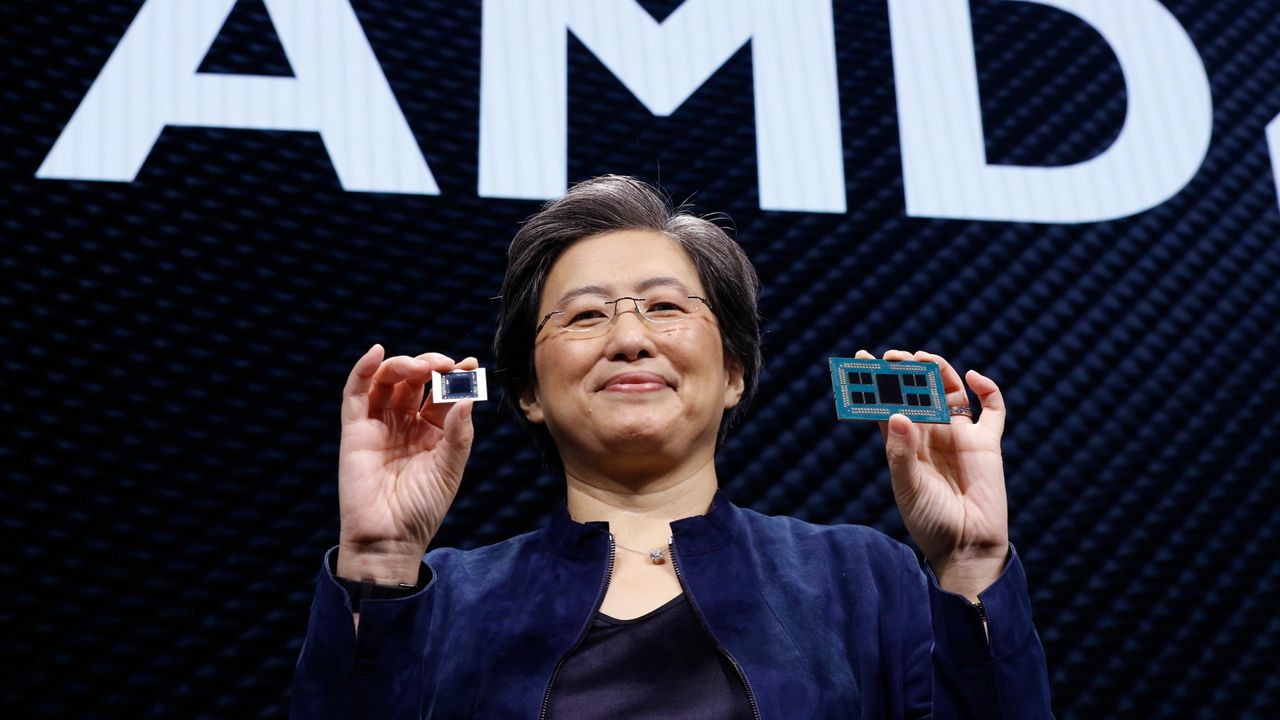
AMD compute and enterprise AI VP Madhu Rangarajan told tech news site CRN that they are expecting next-gen AMD Venice servers to increase the performance lead over next-gen Intel Xeon Diamond Rapids, in part due to Intel's decision to ditch for the upcoming server CPU generation.
The AMD VP said, "We understand that our competitor has made some interesting choices on multithreading and so on. That’s going to help us gain even more market share in a broader enterprise market where that has implications to your licensing and many other costs associated with it."
Rangarajan is referring to Intel's decision to ditch HyperThreading—i.e. simultaneous multi-threading (SMT)—in the Panther Cove P-cores that will lie at the heart of the upcoming server processors. This isn't to be confused with Panther Lake (PTL), Intel's recent snappy laptop chips, which use Cougar Cove P-cores, though these also lack HyperThreading. Different cores, different markets, same absence of multi-threading.
AMD's upcoming Venice server architecture is expected to include SMT, with up to 256 cores and 512 threads per chip.
Intel fellow Srini Krishna responded that the company sees "positive momentum with our data center customers... with the performance, security, and efficiency of [the] Intel Xeon 6 family... Ultimately, winning in the data center is about the aggregate value we deliver across security, efficiency, consistency, quality, and overall platform experience."
Last year, Intel's lead x86 CPU architect, Stephen Robinson, explained the decision to ditch HyperThreading with PTL:
"We didn't lose a lot in client because of hybrid and the core count, but we gained a bit in our design and execution... Now you've kind of got something that's maybe a little bit easier and less expensive and maybe can go a little bit faster... If we can get more workloads running on an E-Core then we can bring more efficiency to the whole platform."
(Image credit: Intel)
The upcoming Xeon server chips will also lack E-cores, however. This is something we've recently heard might be the case for Intel's upcoming tiny mobile chips, the Core 300-series (sans 'Ultra'), though they will use low-power versions of Intel's Darkmont E-cores.
After Diamond Rapids, we can expect SMT to probably return in server chips, however. This is because Intel CEO Lip-Bu Tan explained last year that this is the desire:
"In data center, we are focused on regaining share as we ramp Granite Rapids while also improving our capabilities for hyperscale workloads. To support this, we are reintroducing simultaneous multi-threading (SMT). Moving away from SMT put us at a competitive disadvantage. Bringing it back will help us close performance gaps."
(Image credit: AMD)
Diamond Rapids is expected to launch later this year and be built on Intel's 18A node. What we've seen of 18A so far, with PTL chips, is pretty impressive, so there are no concerns on the node front. Notably, though, Intel's next-gen Nova Lake desktop chips are expected to be made on a mix of Intel 18A and TSMC N2 processes, not full 18A.
In the PC gaming market, AMD chips hold a pretty significant lead against Intel ones, despite new impressive additions like the Core Ultra 7 270K Plus and Core Ultra 5 250K Plus. There's a reason five of the six CPUs we recommend for gaming right now across all budgets are from Team Red: Intel just doesn't have the same value offering when it comes to pure gaming.
However, when it comes to market share, things change somewhat. Despite AMD climbing significantly, Intel still holds about 70% of the desktop CPU market. And the picture is similar in the server market, with AMD making some serious gains but Intel still retaining the lion's share.
Best CPU for gaming 2026