5 Shonen Anime That Are 10/10 Perfect Masterpieces, No Notes
Overview & Key Takeaways
From tactical action to dark fantasy, shonen comes in many flavors.
The universal appeal of shonen has led to some of the most popular anime series of all time. We have heavy-hitters like Naruto, Dragon Ball, and One Piece, which have shaped our standards for decades. Some subvert the shonen framework to tell atypical stories like Mob Psycho 100 or Hunter x Hunter, while others mix and match conventions to yield perfect stories like Fullmetal Alchemist. More recent battle shonen like Jujutsu Kaisen andKagurabachi are steadily evolving the genre, allowing it to grow beyond themes of persistence and the power of friendship.
Although some of these heavy-hitters are expected candidates for perfect shonen you could rate as 10/10, there are plenty of overlooked stories out there that are just as good. As ongoing adaptations like Daemons of the Shadow Realmand Akane-banashi require some time to prove their worth, it doesn’t hurt to shine a spotlight on less-obvious shonen masterpieces that are likely to age well.
With that said, here are five shonen anime that get a perfect score, no notes.
1 World Trigger
Now is a good time to catch up on Toei Animation’s three-season adaptation of World Trigger while we wait for the anime remake. World Trigger might not appeal to everybody — it is a tactical shonen that demands a lot of patience from the audience. There aren’t any traditional power-ups or magic systems that help flesh out its gritty story. World Trigger opens in Mikado City, which is suddenly overrun with monsters called Neighbors. Once the National Defense Agency (also known as Border) leverages Neighbor technology to combat the threat, the appearance of a young boy named Yūma Kuga disrupts everything.
Think of World Trigger like a tense game of chess. Battles are hard-won solely through strategy and teamwork, where most characters are vulnerable to defeat if they make a single mistake. Every combatant relies on the same internal energy called Trion to power their weapons, so there’s little space for anyone to be “overpowered” in the shonen sense of the term. The satisfaction in watching World Trigger comes from characters like Osamu Mikumo, who balance out their physical weakness by sharpening the ability to manipulate battlefield geography and tactically outsmart superior foes.
2 Magi: The Labyrinth of Magic
 Image: A-1 Pictures
A shonen heavily inspired by One Thousand and One Nights is bound to be special, and Magi: The Labyrinth of Magic delivers on every front, and more. It follows a young boy named Aladdin who embarks on adventures inside dungeons with his companion Alibaba. After exiting the first dungeon, Aladdin learns his true purpose, which leads him and Alibaba on a quest like no other. Apart from weaving an engrossing hero’s journey, Magi: The Labyrinth of Magic draws heavily from classic folktales and mythological entities (like Djinn) to enrich its premise.
Dungeon-crawling in shonen works really well on a fundamental level. Just look at the immense success of Solo Leveling, or the outpouring of love that Delicious in Dungeonhas received. Magi: The Labyrinth of Magic succeeds in this while also delving into complex sociopolitics and corruption, and how these ground-level realities tie into human ambition. Antagonists in this world, like David Jehoahaz Abraham, have complicated motivations instead of black-and-white morality, which makes space for characters who dwell in grey areas. While these somber elements offer depth, the anime balances it out with lighthearted comedy that never feels out of place.
3
4 D.Gray-man
 Image: TMS Entertainment
Tragedy fuels some of the best shonen stories, and Katsura Hoshino’s D.Gray-man is one of them. Set in an alternate 19th century, it follows Allen Walker as he joins the Black Order, a group of exorcists. Boasting a dreary Gothic atmosphere while delving into complex psychological themes, D.Gray-man dissects moral ambiguity and the heartbreaking reality of being doomed to a tragic fate. It also dabbles in the age-old question of what makes us human. Does the supernatural erode our humanity, or does it help us better understand what drives us as a collective?
The D.Gray-man anime brings such a dark, textured world to life with Kaoru Wada’s haunting score and a moody visual aesthetic that feels quintessential to early-2000s anime. Secondary characters are brought to the forefront once in a while to give us a succinct idea of life in the 19th century and how most human motivations are cut short by cruel circumstances. Expect Biblical reincarnations who hate humanity, holy artifacts with offensive and supportive stats, and a mysterious source of power that fuels mechanical demons known as Akuma. There’s a lot to love here, including a protagonist who keeps defying shonen conventions while his mind becomes more fractured with time.
5 Megalobox
 Image: TMS Entertainment
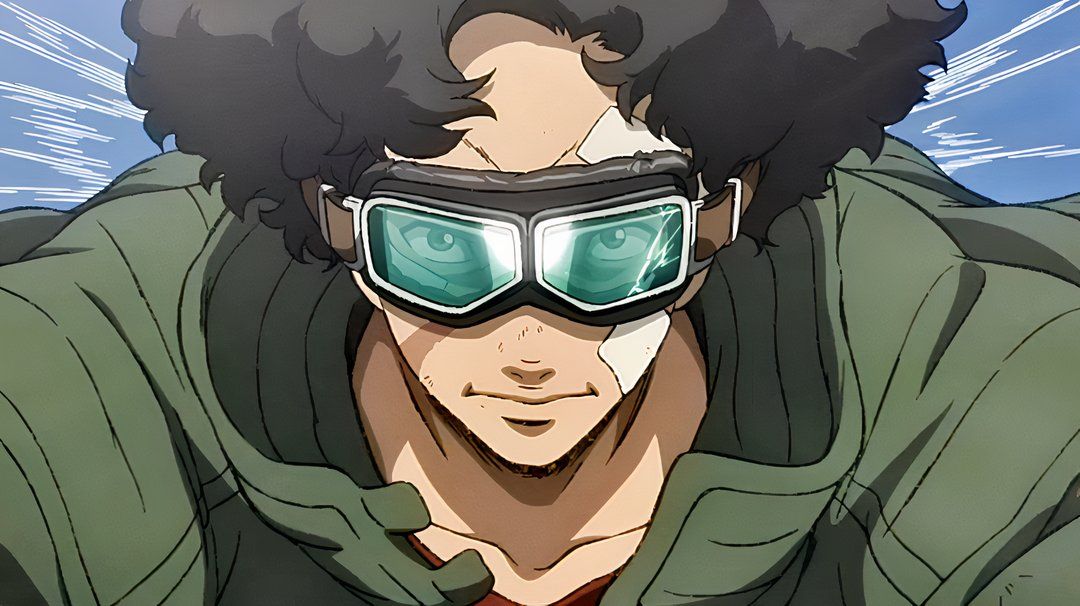
The 26-episode Megalobox adaptation is outstanding for many reasons. Season 1 opens as a classic underdog story that follows Junk Dog, a man who participates in fixed fight club matches inside a massive slum that is home to people without citizenship. Things take a sharp turn after Junk Dog almost crashes into Shirato Group CEO Yukiko Shirato, whose bodyguard Yūri easily defeats our protagonist in a fight. Even so, Junk Dog is urged to fight in the Megaloboxing tournament Megalonia, which demands more than a fighter’s raw strength for enrollment.
This story is brought to life with low-res digital animation that mimics cel-shading, granting Megalobox a distinct, high-contrast aesthetic. Season 2 shifts gears by exchanging the action-oriented storyline for a more poignant one that explores trauma, addiction, and redemption. Although the anime has plenty of impressive battle showcases (which even informed the combat in Creed III), the story shines brightest whenever it is soulful and melancholic. After all, victory and defeat aren’t outcomes that exist in a vacuum. They’re shaped by mindsets, emotional states, and the people we surround ourselves with.
6 Noragami
An urban fantasy masterpiece, Noragami strikes the perfect balance between intricate supernatural lore and hard-hitting emotional stakes. It is also genuinely funny at times, using slapstick humor to advance messy situations or develop character quirks. In this story, high school kid Hiyori Iki saves a down-on-his-luck god named Yato from an oncoming bus, but gets hit in the process. After her soul gets knocked out of her body, Hiyori seeks Yato’s help to return to normalcy, but fate has plenty of otherworldly shenanigans in store for this hapless girl.
In Noragami, gods aren’t omnipotent. Their power is dependent on human devotion, revealing a vulnerability that isn’t traditionally associated with godhood in anime. The central characters are an odd bunch, but deeply flawed in the best ways, as they’re all trying to navigate their existence with a lot of baggage attached to their dreams. Studio Bones has done a spectacular job of alternating between slick and gritty backdrops, allowing the story to develop an effortlessly cool aesthetic. Although the adaptation remains incomplete in the absence of a third season, one can hope that Noragami gets the opportunity to finish telling its delightfully eccentric tale.